NASA Details Three‑Rocket Strategy for Artemis 3 Moon Mission, Launch Date Yet to Be Fixed
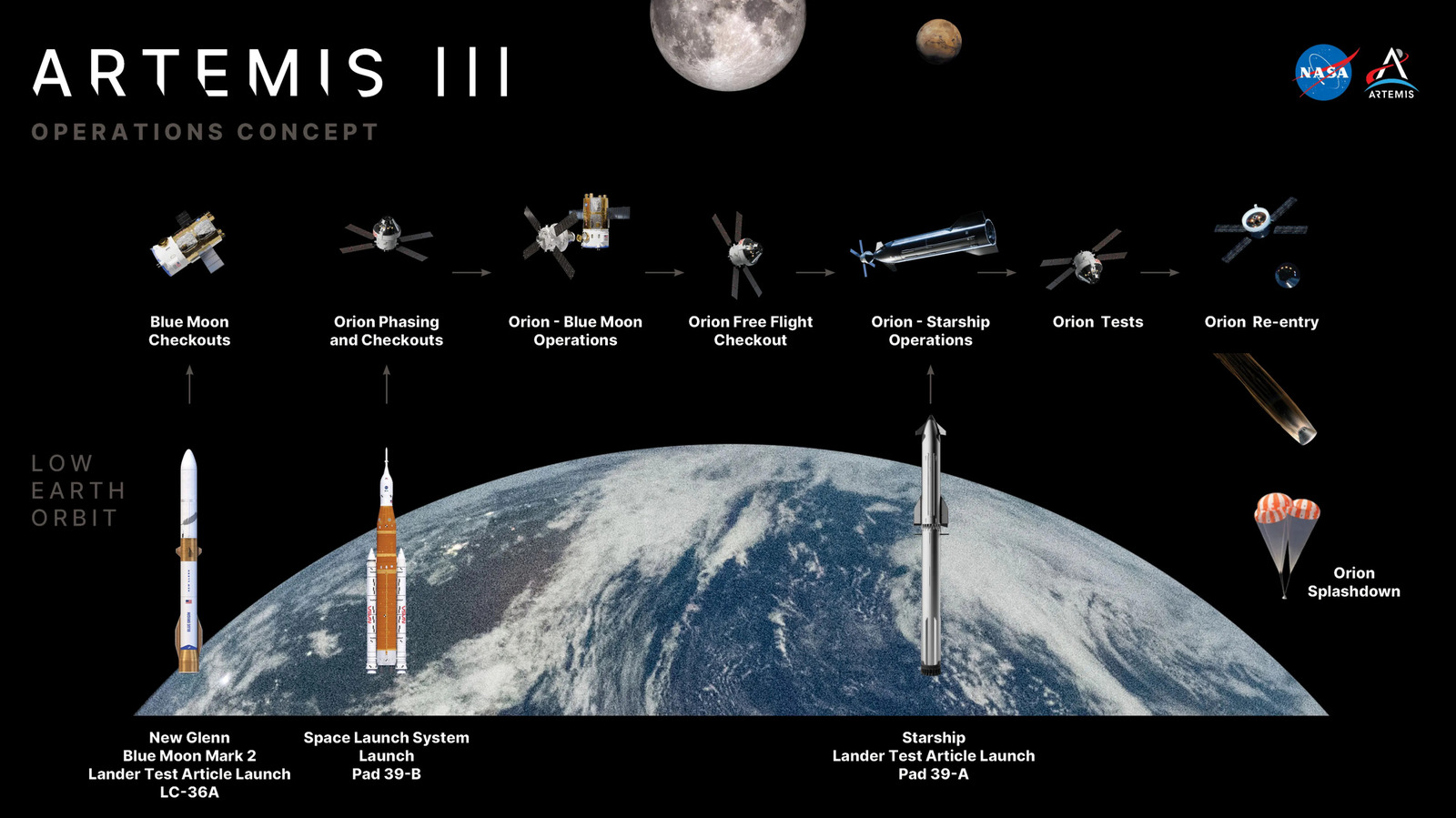
NASA has published a comprehensive plan for Artemis 3, the agency’s next crewed test flight intended to send humans back to the Moon, but officials say a definitive launch date has not been set.
The scheme involves three huge launch elements working together: the Space Launch System (SLS) core stage, its two solid rocket boosters, and the Orion crew capsule that will transport astronauts beyond low‑Earth orbit. These pieces will thrust the crew toward the lunar Gateway, a modest space station meant to act as a staging hub for the descent to the Moon’s surface.
Artemis 3 is slated to become the program’s first mission to land astronauts on the Moon since the Apollo era, aiming to place the first woman and the next man on the lunar south pole. The flight builds on the uncrewed Artemis 1 test, which successfully proved the SLS and Orion in deep‑space conditions, and on the crewed Artemis 2 Moon flyby expected later this year.
Although the launch architecture is now laid out, NASA has not locked in a specific flight window. The agency points to a variety of elements that could affect timing, such as the ongoing SLS development, the readiness of Gateway modules, and budgetary issues under congressional review. Recent remarks from NASA administrators stressed that safety and mission success take precedence over a fixed schedule.
The three‑rocket arrangement highlights the enormity of the effort. The SLS, the most powerful rocket ever built by the United States, will generate the thrust needed to break free of Earth’s gravity. Its solid rocket boosters, each over 50 feet tall, supply the majority of lift‑off power. Orion, fitted with a service module supplied by the European Space Agency, will sustain the crew during the months‑long trek to lunar orbit.
Industry partners and international collaborators are monitoring the timetable closely. The Gateway, a joint venture of NASA, ESA, JAXA and the Canadian Space Agency, is expected to be partially operational by the time Artemis 3 launches, providing a docking port for Orion and a base for lunar surface activities. Delays in any segment could cascade through the wider Artemis schedule, which seeks to create a sustainable human presence on the Moon by the late 2020s.
Looking forward, NASA officials said that once a launch date is confirmed, the agency will commence a series of integrated tests, including a full‑scale rehearsal of the SLS‑Orion system and final certification of Gateway docking procedures. These actions are intended to verify the intricate choreography required for a crewed lunar landing and to resolve any technical issues before the historic flight proceeds.



Comments (0)
Be the first to comment.
Join the discussion