Mac Studio Evolves: Design Adjustments and Performance Gains Across Three Iterations
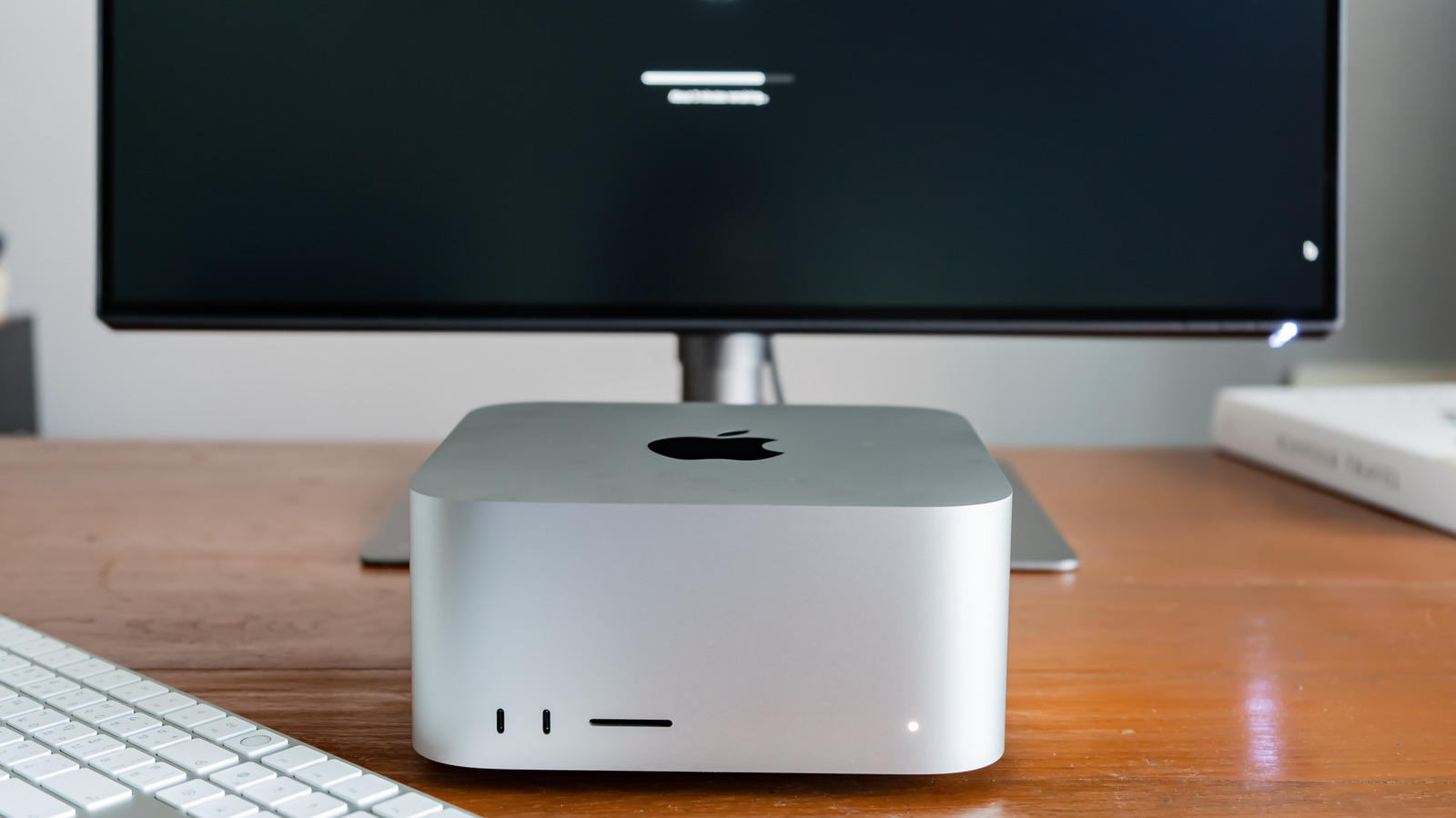
Apple’s Mac Studio has transitioned from a specialized, high‑performance machine to a staple in numerous professional pipelines, with each release delivering internal enhancements and modest external changes.
The first‑generation Mac Studio arrived in early 2022, equipped with Apple’s inaugural M1 Max and, at the top tier, the M1 Ultra—a dual‑M1 Max setup that offered desktop‑level power inside a compact 7.7‑inch square case. Its aesthetic was intentionally understated, featuring a matte aluminum shell, a single front‑mounted power button, and a plentiful selection of ports: four Thunderbolt 4, two USB‑A, HDMI, and a 10‑Gb Ethernet slot.
Roughly a year later, Apple rolled out the second‑generation version powered by the M2 Ultra chip. Although the outward shape stayed almost identical, the upgraded silicon produced a noticeable rise in CPU and GPU performance, thanks to more cores and greater memory bandwidth. Benchmarks from Apple and third‑party testers recorded up to a 30 percent boost in rendering workloads and smoother performance on large video projects, cementing the Mac Studio’s reputation among creators who demand sustained power without the size of a tower.
In addition to speed, the 2023 update introduced subtle design modifications. The rear port arrangement was altered, moving the power connector nearer the left edge to ease cable routing in tight studio environments. Apple also upgraded the cooling architecture, adding a larger heat‑pipe network that kept fan noise low even during extended heavy use. Internally, the refreshed models now support up to 128 GB of unified memory, doubling the previous 64 GB limit of the M1 Ultra and enabling more demanding, data‑heavy applications to run fluidly.
These refinements matter because the Mac Studio fills a distinct slot between Apple’s consumer‑oriented desktops and the high‑end, modular Mac Pro. Its small footprint paired with professional‑grade performance makes it an appealing choice for freelancers, boutique studios, and even larger companies seeking to adopt Apple silicon while retaining some expandability. The increased memory ceiling and enhanced thermal design also prolong the machine’s viable lifespan, postponing expensive upgrades.
Analysts point out that Apple’s incremental strategy—preserving the same chassis while swapping in more potent processors—mirrors the approach taken with the iMac and MacBook families. This stability allows developers to fine‑tune software for a consistent hardware envelope, and users enjoy reliable accessory compatibility. At the same time, the modest design tweaks demonstrate Apple’s responsiveness to user feedback, particularly concerning port placement and acoustic performance.
Looking forward, speculation revolves around a potential next‑generation Mac Studio built on the forthcoming M3 platform, which could bring even higher core counts and further memory scaling. Rumors also hint at a shift toward a modular internal architecture, possibly letting owners upgrade components like storage or GPUs without discarding the whole unit. Until official specifications are announced, the current Mac Studio range stands as proof of Apple’s capacity to evolve a product through targeted hardware improvements while preserving its visual identity.
For professionals comparing desktop solutions, the Mac Studio’s progression highlights a wider industry movement: merging a compact form factor with workstation‑level performance, propelled by the rapid strides of Apple’s custom silicon.


Comments (0)
Be the first to comment.
Join the discussion