Gravitational Wave Discovery Fuels Hope for Primordial Black Hole Detection, Renewing Dark Matter Search
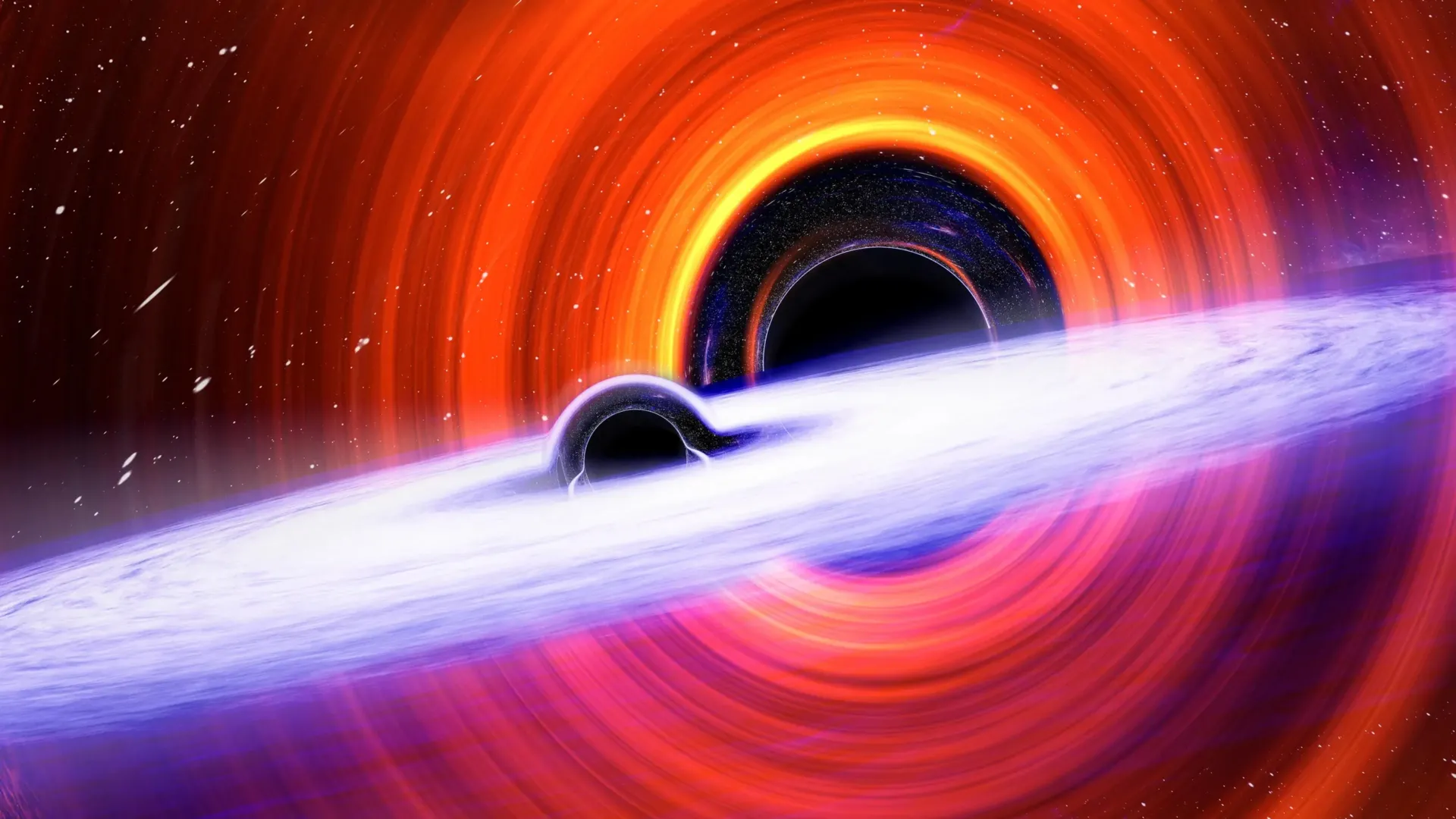
A never-before-seen gravitational wave detection by the Laser Interferometer Gravitational-Wave Observatory (LIGO) has sparked considerable excitement among scientists, hinting at a potential breakthrough in one of cosmology's most persistent mysteries. This distinct signal has reignited speculation that primordial black holes, previously considered mere theoretical constructs, could finally be within reach, offering a compelling clue to the enigmatic character of dark matter.
Gravitational waves, which are ripples in spacetime generated by extreme cosmic occurrences, have become an indispensable instrument for observing the cosmos. Since their initial direct observation, facilities like LIGO have revealed new perspectives on phenomena such as merging black holes and neutron stars. However, this most recent signal stands out, leading investigators to contemplate a less conventional source: black holes that formed in the universe's nascent stages, rather than from the collapse of massive stars.
Primordial black holes (PBHs) are theoretical astronomical bodies believed to have formed mere fractions of a second after the Big Bang, predating the emergence of stars and galaxies. Unlike their stellar counterparts, their masses could vary immensely, from exceedingly small to colossal. The concept of PBHs has garnered significant attention because, should they exist in sufficient quantities, they might account for a substantial portion, if not all, of the universe's elusive dark matter.
Dark matter, an unseen substance that gravitationally interacts but neither emits nor absorbs light, makes up approximately 27% of the universe's total mass-energy content. Its presence is deduced from its gravitational influence on visible matter, yet its core composition remains unknown. The prospect that primordial black holes could be the missing dark matter particles would fundamentally alter our comprehension of cosmic structure and its evolution.
While this detection is remarkable, scientists stress that further research and corroboration are crucial. The “unusual” character of the signal suggests it does not align perfectly with current models of stellar-mass black hole mergers. Researchers will now meticulously examine the data, seek out similar occurrences, and refine their theoretical frameworks to ascertain if this signal indeed indicates the existence of these ancient celestial remnants.
The renewed emphasis on primordial black holes highlights the dynamic essence of astrophysical exploration. If subsequent observations confirm this hypothesis, it would not only resolve a major cosmic puzzle but also offer unparalleled insights into the conditions of the very early universe and the processes that shaped its fundamental constituents. The pursuit to uncover dark matter continues, now potentially with a powerful new direction.


Comments (0)
Be the first to comment.
Join the discussion