DESI's Vast 3‑D Map of the Cosmos Challenges Fundamental Cosmology Assumptions
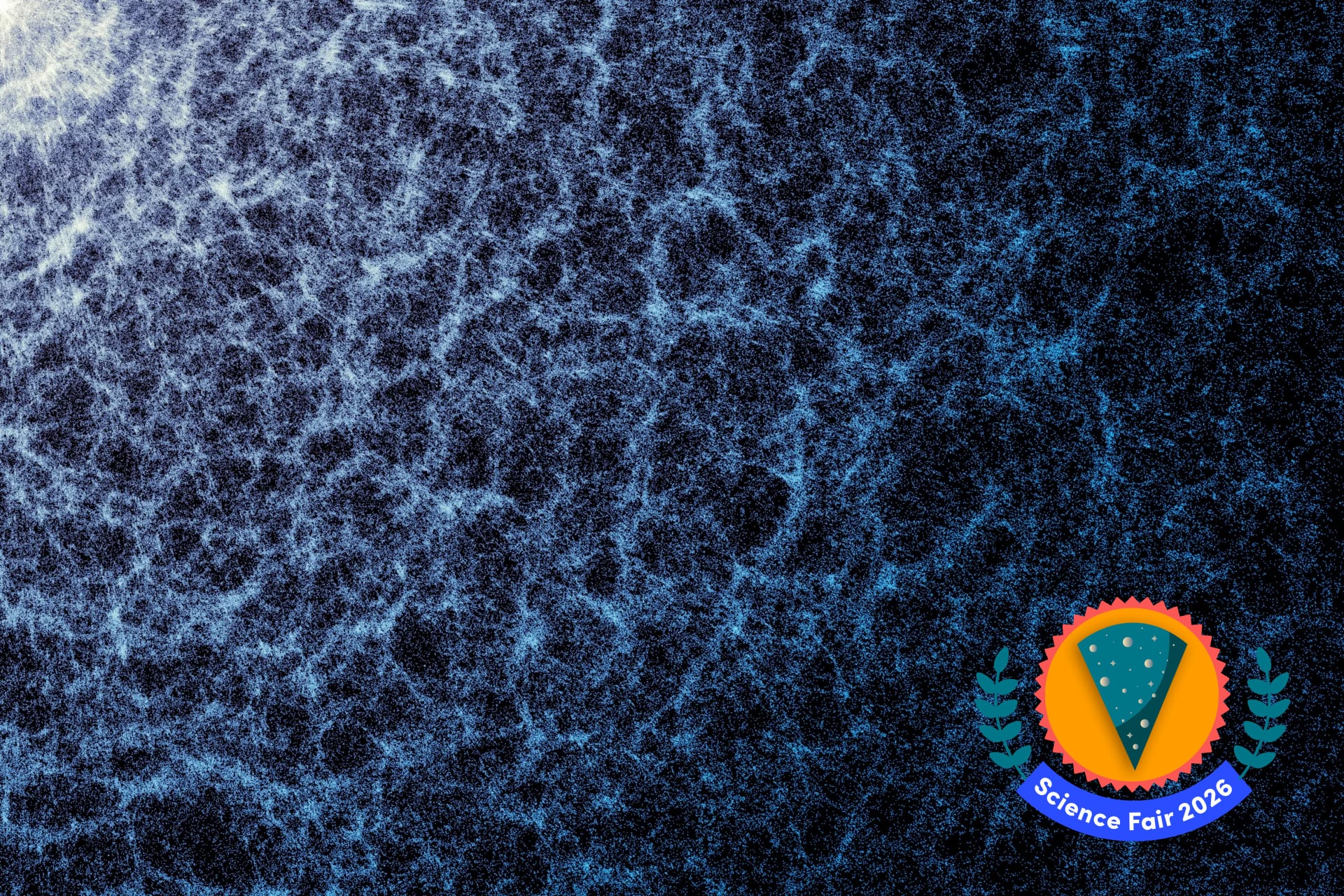
The Dark Energy Spectroscopic Instrument (DESI) collaboration has unveiled the largest three‑dimensional map of the observable universe ever produced. By recording the locations of millions of galaxies and quasars over a broad sky area, the map supplies an unmatched picture of the large‑scale structure that underlies contemporary cosmology, and researchers say its sheer breadth is already prompting a re‑evaluation of long‑standing models of cosmic composition and expansion rate.
DESI, a partnership of more than a dozen institutions and hundreds of scientists, employs a 5000‑fiber spectrograph attached to the Mayall telescope at Kitt Peak. In recent years the instrument has gathered spectra for tens of millions of distant objects, turning redshift data into accurate distance determinations. The resulting three‑dimensional catalogue covers a volume far exceeding that of earlier surveys such as the Sloan Digital Sky Survey, enabling cosmologists to trace the cosmic web with unprecedented detail.
The freshly released map is already revealing subtle mismatches between the observed clustering of matter and the predictions of the standard Lambda‑Cold Dark Matter framework. Notably, the distribution of matter on intermediate scales seems inconsistent with the Hubble‑constant values derived from the cosmic microwave background. Although the divergences are modest, they reach statistical significance sufficient to ignite vigorous discussion about whether extra physics—perhaps evolving dark energy or new particle species—may be required.
Many observers label the present moment a “golden era” for cosmology, driven by a convergence of high‑precision surveys, sophisticated simulations, and refined analytical tools. In addition to DESI, initiatives such as the Vera C. Rubin Observatory and the Euclid space telescope are set to provide complementary data that will test the same cosmological parameters from independent perspectives. The combined effort of these projects promises either to bolster the current paradigm or to expose fissures that could trigger a fundamental shift.
Looking forward, the DESI team intends to broaden its reach to fainter galaxies and to improve redshift accuracy with upgraded calibration pipelines. As the catalogue matures, scientists expect tighter limits on dark energy’s equation of state and a clearer view of structure formation over cosmic time. Whether the emerging tensions can be accommodated within the existing model or demand a revision of core assumptions, the extraordinary depth of this new three‑dimensional map ensures that the coming years will be pivotal for our grasp of the universe.


Comments (0)
Be the first to comment.
Join the discussion