Close‑by Trio of Dwarf Stars Challenges Formation Theories, Astronomers Say
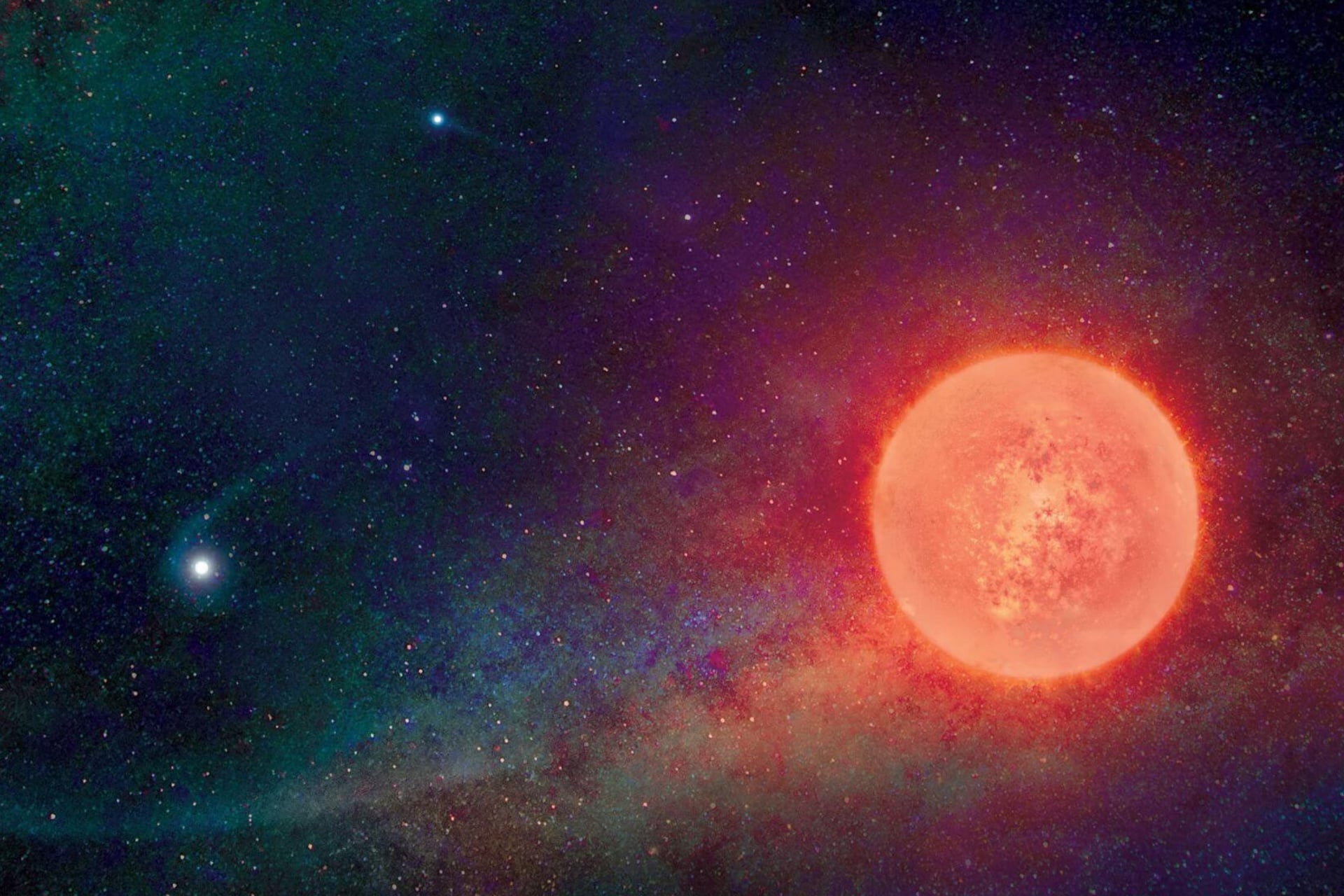
Astronomers have discovered a compact group of three dwarf stars situated just 28 light‑years away, a setup that existing models of stellar formation find difficult to account for.
The trio was uncovered unexpectedly during an exoplanet survey of nearby stars. Precise spectroscopic measurements detected slight tremors in the primary star’s trajectory, leading investigators to examine further and reveal two more dim companions.
Each of the three components is a low‑mass red dwarf, about one‑tenth the Sun’s mass, circling each other inside a zone roughly the size of Mercury’s orbit around the Sun. Though packed tightly, their mutual gravitation forms a surprisingly stable choreography, defying the chaotic behavior expected at such distances.
Astrophysicists note that this configuration questions traditional concepts of multiple‑star formation. Conventional theory holds that three similarly massive stars would either coalesce early or expel one another, resulting in a binary. This newly found triple implies either an uncommon initial setup or an unidentified process that mitigates destabilizing influences.
In addition to its theoretical significance, the find carries practical weight for planet‑search initiatives. Crowded stellar neighborhoods are usually considered unfavorable for planet formation, but the presence of this system compels a reassessment of potential locales for Earth‑like planets.
Further observations using next‑generation tools—such as high‑resolution interferometers and long‑baseline radio arrays—are slated to chart the orbits with greater accuracy and evaluate rival formation models. As more data are gathered, this nearby triple could serve as a reference point for sharpening our grasp of stellar dynamics across the galaxy.



Comments (0)
Be the first to comment.
Join the discussion