Antarctic Winter Sea‑Ice Extent Drops to Third‑Lowest on Record in 2026, Hinting at Possible Long‑Term Change
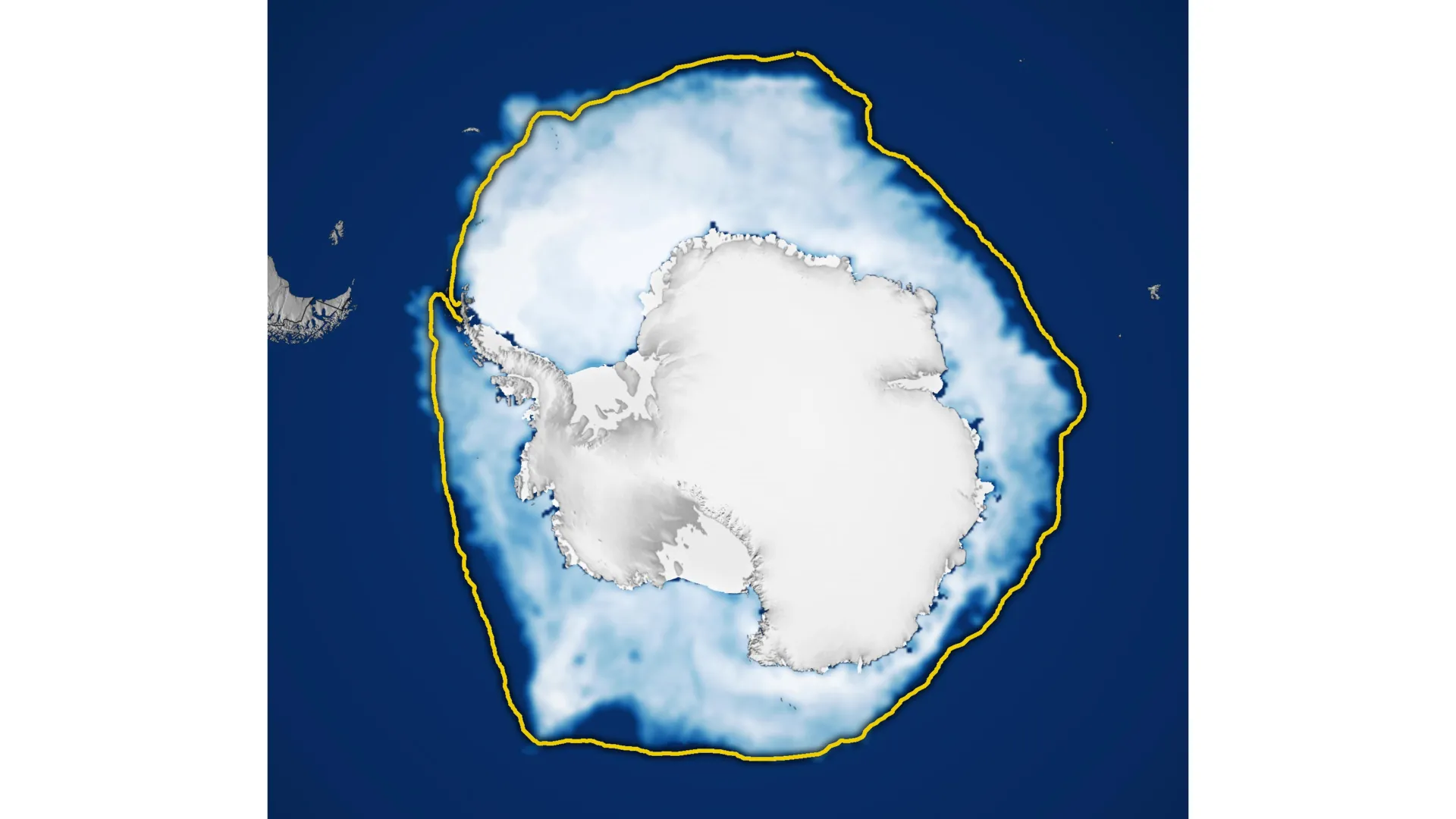
In 2026, Antarctic sea ice fell to the third‑lowest winter maximum ever recorded, marking a sharp turnaround following ten years of extraordinary growth that had driven the ice edge farther north than any previous measurement.
Satellite data indicate that the Southern Hemisphere’s winter extent dropped far beneath the 1979‑2020 mean, ranking just above the two smallest values recorded since satellite monitoring began. This drop succeeds a stretch that started in the early 2010s, during which Antarctic sea‑ice repeatedly achieved new seasonal maxima—a pattern that confounded climate researchers and led to adjustments in projection models.
Scientists are investigating a range of possible causes behind the sudden decline. Shifts in wind regimes, especially an intensification of the circumpolar westerlies, are capable of moving ice floes and thinning the pack. Concurrently, warmer currents reaching the continental shelf may be eroding ice from underneath, and a drop in freshwater runoff from melting glaciers might modify surface salinity and stability. These interacting mechanisms are being probed with coupled ocean‑atmosphere models and expanded field campaigns.
This shift has wider ramifications for Earth’s climate. Although the Arctic has been shedding sea ice consistently for many years, the Antarctic’s recent expansion was often referenced as a balancing factor. An abrupt shrinkage could erode that compensation, influencing global albedo, heat transfer, and the vigor of oceanic currents that connect the poles with lower latitudes.
From an ecological standpoint, a reduced and more broken ice sheet could upset habitats of krill, penguins and seals that depend on solid sea‑ice platforms for breeding and foraging. These alterations may cascade through the Southern Ocean food chain and affect commercial fisheries that harvest krill.
Researchers stress that the 2026 minimum alone does not establish a firm trend, yet it highlights the importance of sustained observation. Current satellite programs, autonomous profiling floats, and research‑ship expeditions are intended to determine whether this dip signals the onset of a prolonged decline or merely a short‑term wobble within a more intricate cycle. The results will be incorporated into next‑generation climate models, which need to represent swift polar changes to better forecast future sea‑level rise and worldwide weather patterns.


Comments (0)
Be the first to comment.
Join the discussion