Allied Autonomous Submarine Fires US Mk‑48 Torpedo in Historic Joint Test
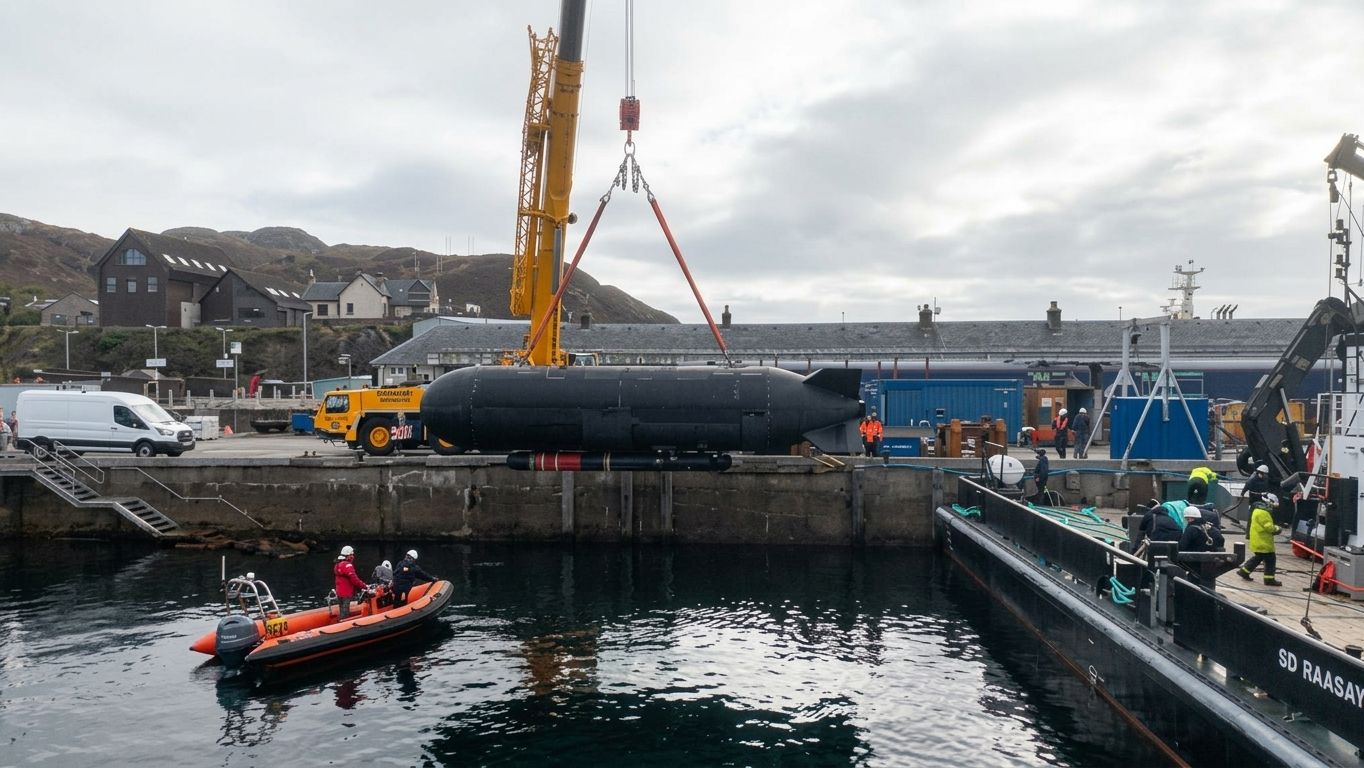
The Royal Navy’s experimental XV Excalibur unmanned submarine achieved a successful launch of an American Mk 48 heavyweight torpedo on Tuesday, representing the inaugural instance of a partner nation’s driver‑less vessel discharging a live weapon during a coordinated exercise.
Conducted as part of the United Kingdom’s Project Broadsword, the trial concluded a seven‑month integration campaign during which engineers attached the 3,700‑pound torpedo to the outer hull of Excalibur. Oversight was provided jointly by U.S. and British naval officials, who hailed the moment as a “historic first for allied undersea warfare.”
The Mk 48, the U.S. Navy’s chief anti‑ship and anti‑submarine torpedo, is celebrated for its deep‑water effectiveness and active‑/passive‑acoustic guidance. By modifying the weapon for release from an unmanned platform, the two sides intend to broaden future naval strike reach while lowering personnel risk.
Project Broadsword, initiated in 2022, aims to prove that autonomous underwater vehicles (AUVs) can transport and employ conventional heavyweight munitions. The program mirrors a wider NATO trend toward embedding unmanned systems within existing fleets, driven by demands for persistent surveillance, rapid reaction, and cost‑efficient deterrence in contested seas.
Senior officers briefed on the exercise said the successful launch confirms critical software and mechanical interfaces that enable Excalibur to locate a target, maneuver into position, and fire the torpedo without human input. The test also demonstrated that the torpedo’s launch tube and safety features operated correctly when mounted externally, a setup not previously used operationally.
Although the demonstration took place on a controlled test range, analysts observe that the capability could transform how allied navies confront threats in zones where surface ships or manned submarines are more vulnerable to detection. Unmanned craft can dive deeper and remain on station longer, potentially delivering strike options in denied areas such as the South China Sea or the Arctic.
Both services have indicated that upcoming trials will concentrate on target detection, fire‑control integration, and the creation of standardized data links for real‑time mission updates. The next stage may feature live‑fire drills against moving targets and the examination of additional payloads, including mines and sensor suites.
The triumphant torpedo launch highlights the deepening defence partnership between the United States and the United Kingdom, underscoring the strategic focus on interoperable technology. As allied forces keep investing in autonomous undersea capabilities, the distinction between conventional submarine warfare and unmanned combat operations is set to blur further, prompting doctrinal and procurement adjustments across NATO.


Comments (0)
Be the first to comment.
Join the discussion