Wooden “Heartwood” PC Combines RTX 5090 Power with Desk‑Embedded Design
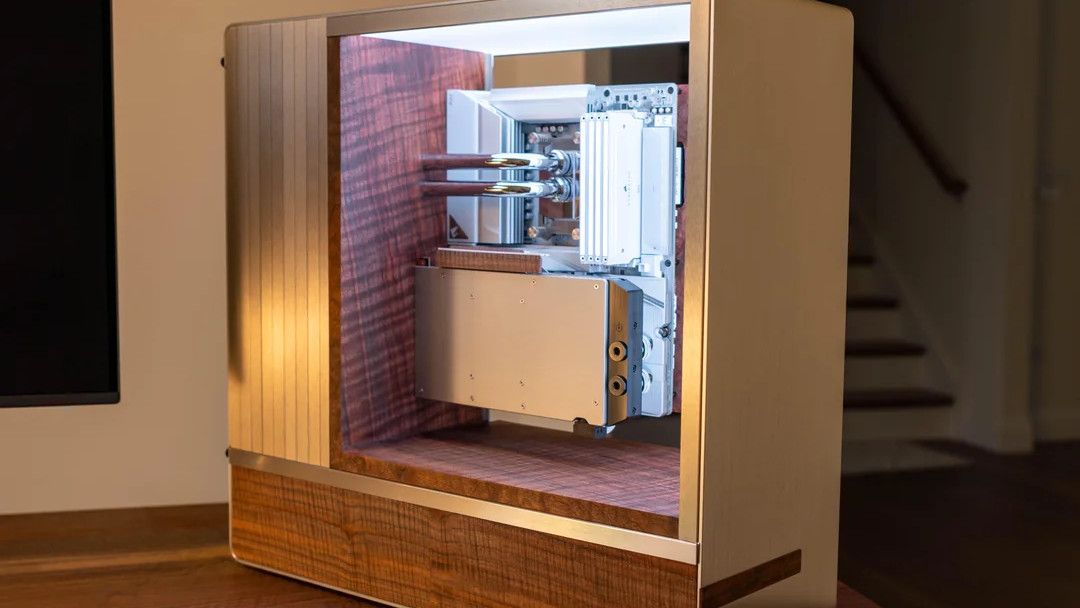
After seven years of development, a singular gaming machine named “Heartwood” emerged—a wooden case that encloses an RTX 5090 GPU and fits neatly within a desk’s framework. First featured by TechRadar, the build demonstrates that top‑tier hardware can live alongside natural wood without compromising looks or utility.
Where typical cases hide wiring and cooling parts inside a metal enclosure, Heartwood directs its thermal tubes and power cables underneath the tabletop. This hidden passage beneath the desk keeps the exposed side of the system exceptionally clean, making it appear as a seamless slab of polished wood rather than a tangled PC.
Selecting wood as the main material taps into an expanding niche of PC hobbyists who value visual cohesion with their environment. While artisans have historically tested hardwoods for sound and heat characteristics, Heartwood takes the idea a step further by integrating the computer into the furniture itself, converting a standard gaming rig into functional artwork.
Engineering challenges dominated the seven‑year build process. The RTX 5090, among the most power‑hungry graphics cards available, produces considerable heat that needs effective dissipation. By moving the cooling circuit outside the case, the creators sidestepped the limited space of an internal enclosure, permitting sizable radiators and extended tubing to sit discreetly under the desk. The layout also eases later upgrades, since parts are reachable without taking apart the wooden shell.
Analysts point out that Heartwood highlights a wider movement toward custom‑made computers. Although the market is saturated with mass‑manufactured cases, a niche of buyers is prepared to devote time and money to tailor‑made systems that mirror their aesthetic preferences and décor. The protracted build period illustrates both the obstacles and the commitment needed to merge high‑end performance with handcrafted skill.
Looking forward, the Heartwood prototype could motivate additional creators to experiment with hybrid configurations that detach functional components from their visual façade. As hardware power climbs and design trends shift, approaches that conceal complexity yet preserve effective cooling may gain broader acceptance, particularly among users who regard their PCs as both instruments and design statements.



Comments (0)
Be the first to comment.
Join the discussion