Tiny Stone Projectiles Indicate Arrow‑Style Hunting 80,000 Years Ago
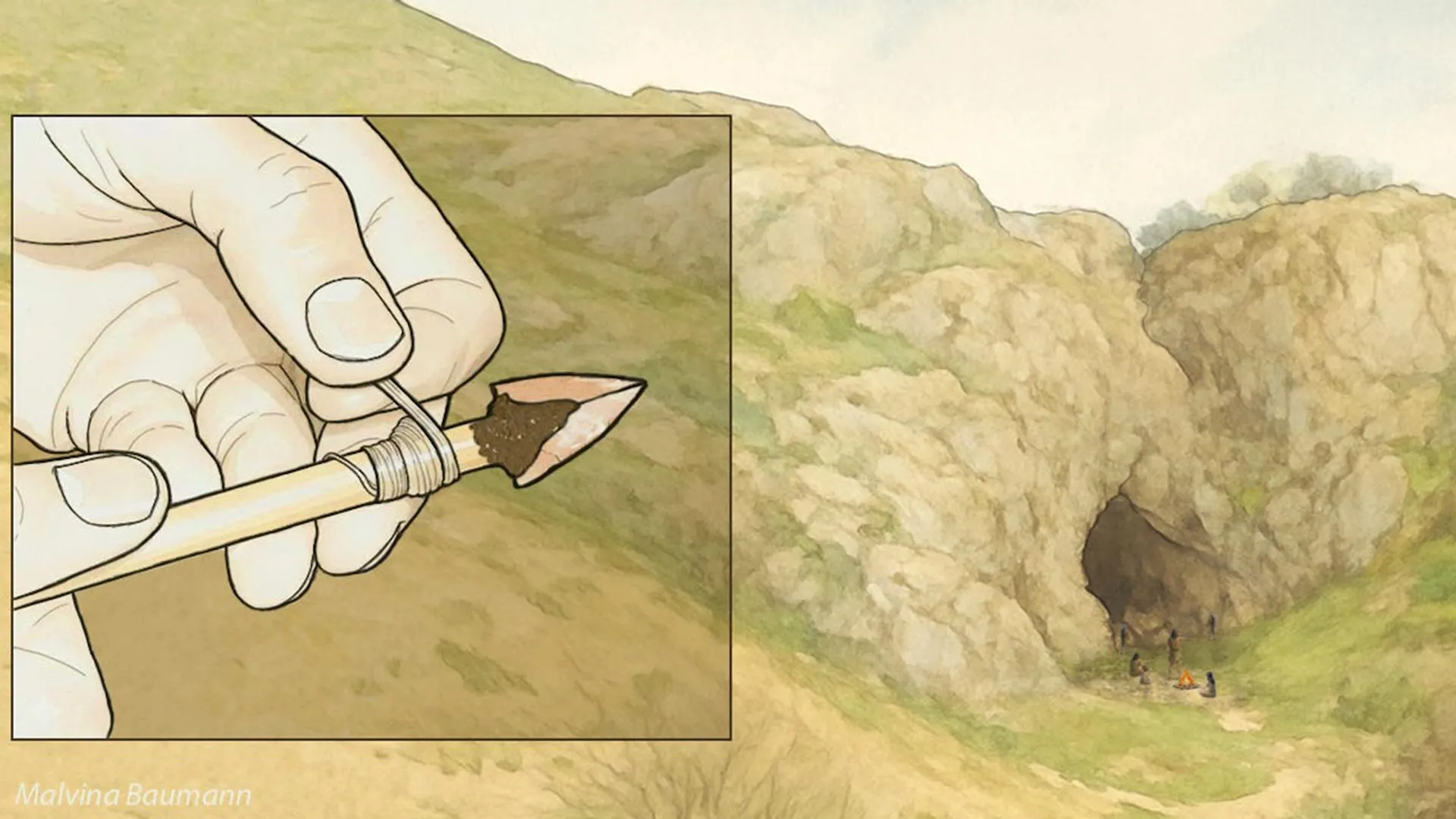
In Uzbekistan’s Kyzylkum Desert, archaeologists have recovered a collection of tiny stone projectile points dating to about 80,000 years ago, a discovery that may shift the known emergence of arrow‑type weaponry to a far earlier period.
Only a few millimetres in size, the objects came from a sediment stratum linked to Middle Paleolithic lithic assemblages. Microscopic examination showed a symmetric, leaf‑shaped outline and a delicately retouched edge—characteristics that closely resemble Upper Paleolithic arrowheads found at locations like France’s La Madeleine complex. Experiments in the lab demonstrated that striking a soft medium with the points left puncture marks indicative of high‑speed impact, implying they were meant to be fired from a shaft.
Scholars have long agreed that genuine arrows—projectiles propelled by a flexible bow—first emerged roughly 20,000 to 30,000 years ago, alongside the expansion of anatomically modern humans throughout Europe and Asia. The Uzbek find contests this chronology, suggesting that certain hominin populations already had the expertise to produce and employ aerodynamic points much earlier, perhaps even prior to Homo sapiens reaching the area.
Scientists warn that the points might have been used with a rudimentary spear‑thrower rather than a fully formed bow, yet the exactness of their manufacture and the wear marks point to an intentionality akin to later arrow technology. Should these points belong to a bow‑and‑arrow arrangement, it would imply that hunting implements evolved in parallel among separate hominin groups, possibly encompassing Neanderthals or other archaic humans present in Central Asia then.
This discovery contributes to an expanding corpus of data indicating that ancient peoples were technologically more adaptable than conventional models suggest. It also sparks inquiries into how hunting innovations spread across great distances and diverse cultures. Ongoing digs in the area hope to uncover further contexts—like hafting residues or related bow fragments—that could verify the manner in which these minute tools were used. Until such evidence appears, the Uzbek points serve as a striking reminder that humanity’s inventive narrative continues to be revised, one microscopic fragment at a time.


Comments (0)
Be the first to comment.
Join the discussion