Thin Crescent Moon to Pass Over Jupiter in Uncommon Pre‑Dawn Alignment Over Eastern North America
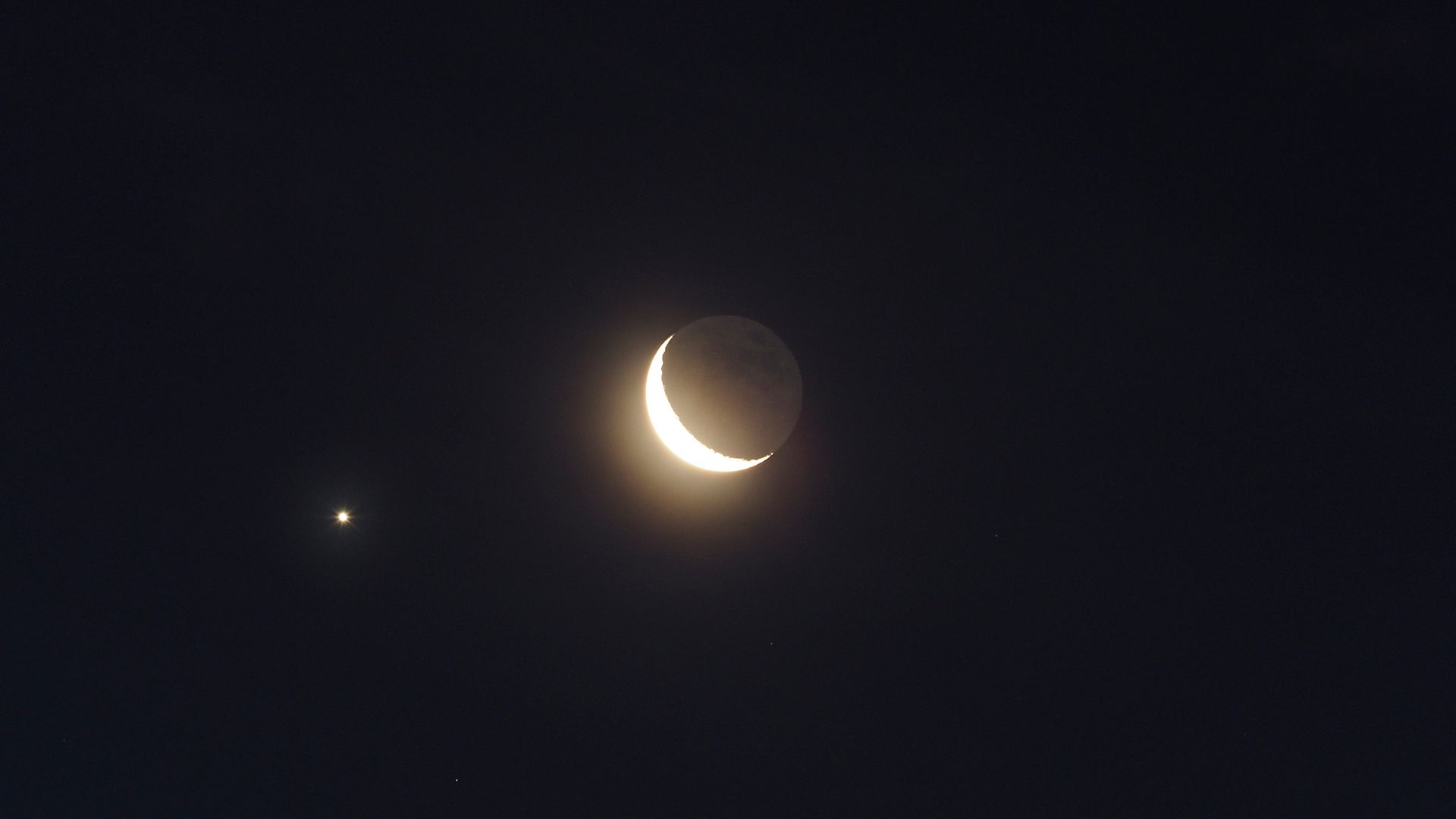
From the Atlantic coast to the Great Lakes, sky enthusiasts will witness a brief, unusual display early Tuesday morning, Oct. 6, as a thin crescent moon moves directly across the bright planet Jupiter, briefly hiding it from view.
This event, an occultation, is unlike a solar eclipse because it is a planet—not the Sun—that is obscured by the Moon. Jupiter, the solar system’s fifth planet and one of the night sky’s most luminous objects, will be concealed for a few minutes while the Moon’s edge sweeps over its disk, creating a striking sight rarely seen with the naked eye.
Such occurrences are rare; astronomers calculate that a Jupiter‑Moon occultation visible from this region happens roughly once every ten years. The last similar alignment observable across much of eastern North America occurred in the mid‑2010s, making this a decade‑long chance for both hobbyists and professionals.
Observers must watch in the pre‑dawn gloom, just before sunrise, when darkness still allows the Moon’s silhouette to be seen against the starry background. The Moon will be in a waning crescent phase, appearing as a thin arc that will glide over Jupiter’s orange‑brown globe. No special gear is needed to notice the planet’s brief disappearance, though binoculars or a modest telescope will improve the view and reveal Jupiter’s four largest moons sparkling nearby.
Beyond its visual charm, the occultation supplies valuable data for researchers. Accurately timing Jupiter’s disappearance and reappearance refines measurements of lunar topography and orbital dynamics, while also confirming predictions of Jupiter’s position. Amateur astronomy clubs throughout the area plan coordinated observations, adding to a larger dataset that can help calibrate lunar motion models.
Looking forward, the next major planetary occultation visible from North America won’t happen for several years, highlighting today’s rarity. As sunrise nears, observers should seek an unobstructed eastern horizon, check local weather forecasts, and share the experience on social media to raise awareness of the ever‑changing sky above us.


Comments (0)
Be the first to comment.
Join the discussion