Study Shows Offshore Wind Turbine Foundations Can Cool Surface Waters via Increased Mixing
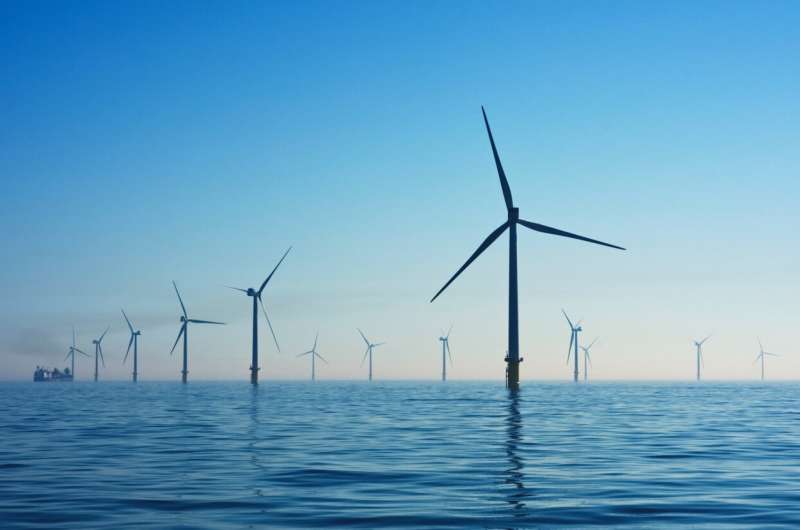
Recent results from the European PELAgIO ECOWind research programme reveal that the support structures of offshore wind turbines are capable of changing the temperature of the water directly overhead. The turbulence they create draws colder, deeper water upward, leading to a detectable decrease in sea‑surface temperature right around the wind farms.
Researchers paired high‑resolution oceanographic gear installed at a number of active wind farms with numerical models that simulated flow around monopile and jacket foundations. The instruments captured temperature, salinity and velocity data at various depths, whereas the simulations separated the impact of the turbine bases from wind‑induced mixing. This combined methodology enabled the team to measure the cooling effect and chart its spatial variability across sites.
The core mechanism involves breaking the typical stratification of the water column. When currents meet the sizable cylindrical or lattice‑type bases, they produce vertically‑extending vortices. These swirls draw water from beneath the thermocline—typically a few degrees colder than the surface—and lift it upward. Consequently, a slender, cooler surface layer can develop and remain for several hours, particularly under low ambient wind conditions.
How strong the cooling becomes is largely dictated by local oceanographic settings. In zones with pronounced stratification, the temperature gap between deep water and the surface is greater, intensifying the effect. In contrast, in well‑mixed waters or during strong surface wind events, the extra mixing induced by the foundations is overwhelmed by natural turbulence, rendering surface temperature shifts almost insignificant.
The findings carry practical relevance for climate considerations and marine ecosystems alike. A small, localized drop in sea‑surface temperature may help balance the heat budget of a coastal area, adding to the low‑carbon energy benefits of the turbines. For marine life, shifted temperature regimes could influence plankton blooms, fish recruitment and the range of species sensitive to temperature, underscoring the importance of ecological monitoring.
However, the scientists warn against presuming an unqualified positive impact. Increased mixing may also move nutrients or contaminants, and the cooling could be counterbalanced by other climate‑related pressures. Given the highly site‑specific nature of these interactions, regulators and developers are encouraged to include oceanographic evaluations during the planning of new offshore wind installations.
Upcoming research will broaden the monitoring network to encompass more wind farms and sharpen the models for forecasting temperature shifts under various climate scenarios. Incorporating these insights will enable policymakers to more accurately weigh the trade‑offs of offshore wind growth, ensuring that renewable energy development proceeds with a clear grasp of its oceanic footprint.


Comments (0)
Be the first to comment.
Join the discussion