Star Formation Slows Even as Cosmic Hydrogen Remains Plentiful, Study Shows
Recent analysis indicates that the cosmic star‑creation rate has fallen dramatically during the past 4.5 billion years, while the amount of neutral hydrogen—the essential fuel for forming stars—has stayed essentially constant.
Surveys of star‑forming activity in numerous galaxies reveal a sharp drop from the universe’s peak star‑formation era to today. By employing ultraviolet and infrared data that trace recent births of stars, astronomers have measured this deceleration, reinforcing the well‑known pattern of decreasing stellar output.
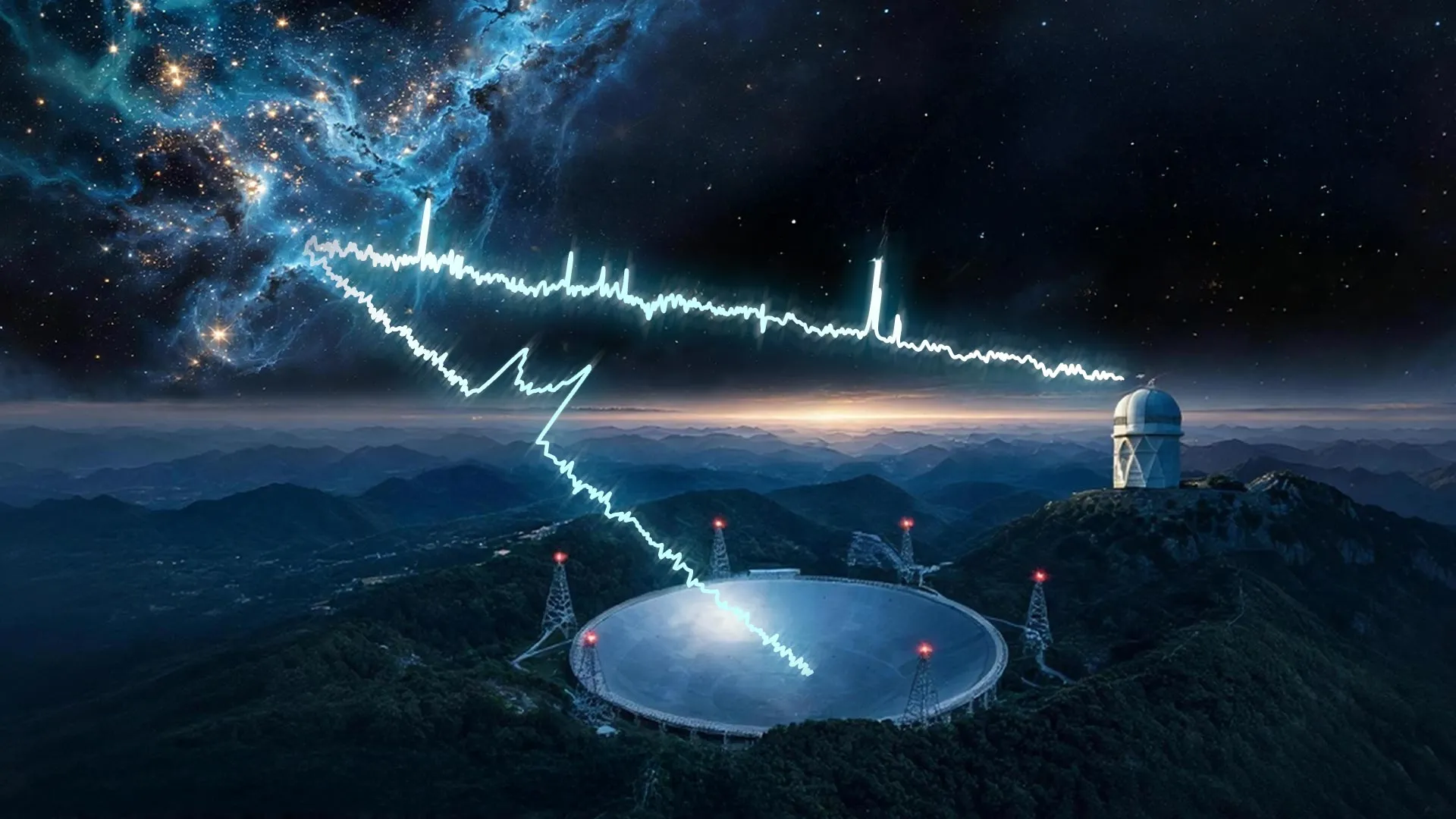
Conversely, 21‑centimetre line observations of neutral hydrogen—taken with China’s Five‑hundred‑meter Aperture Spherical Telescope (FAST) and bolstered by additional wide‑field surveys—show that the aggregate mass of this gas across the observable cosmos has barely changed. These results imply that the stockpile of star‑forming fuel remains abundant, contrary to standard expectations.
Conventional galaxy‑evolution models typically attribute the decline in star formation to a slow depletion of gas reserves. The latest findings challenge this straightforward view, suggesting that the current limitation may instead stem from the gas’s capacity to cool, condense, and succumb to gravitational collapse.
Researchers outline a number of processes that might block hydrogen from turning into stars even when plentiful. Powerful feedback from supermassive black holes and strong stellar winds can heat nearby gas, keeping it too warm to collapse. Moreover, heightened turbulence and growing metallicity in the interstellar medium could modify the conditions necessary for star‑forming clouds to emerge.
This revelation carries wide‑reaching consequences for forecasting galaxy evolution. Should the present inefficiency endure, the cosmos could shift into a phase where enormous amounts of hydrogen remain diffuse, with only occasional regions sparking new stars. Such a situation would reshape expectations for galaxy luminosity, chemical enrichment, and the ultimate destiny of cosmic structures.
Upcoming studies will strive to chart hydrogen’s distribution and physical condition with higher accuracy, merging FAST data with future instruments like the Square Kilometre Array. Concurrent progress in computational simulations will examine how heating, feedback, and environmental influences govern star formation. Combined, these initiatives aim to explain why the universal star‑forming engine has stalled even though its fuel reservoir stays full.


Comments (0)
Be the first to comment.
Join the discussion