Scientists Detect First Definitive Radio Emission From an Exoplanet, Not an Extraterrestrial Beacon
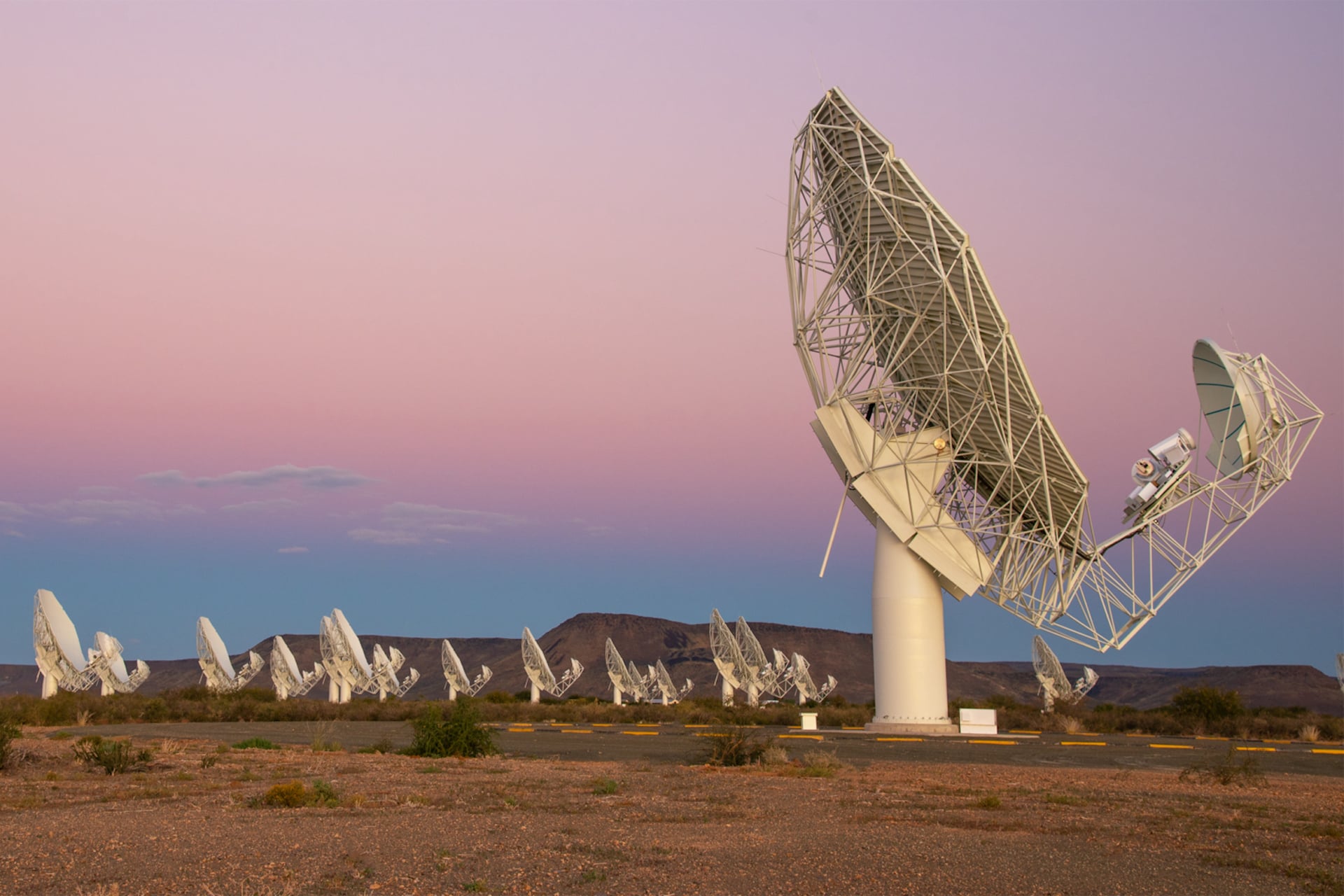
Researchers revealed today that they have recorded a clear radio signal coming from a world outside our Solar System, representing the inaugural instance where such emissions can be confidently attributed to an exoplanet instead of to far‑off stellar phenomena or Earth‑based noise.
The origin is a gas giant circling a nearby Sun‑type star about 50 light‑years away. By employing a synchronized array of terrestrial radio dishes, the team detected a recurring flash of low‑frequency waves that coincides with the planet’s orbital cycle, enabling them to distinguish it from ambient interference.
Such radio emissions are anticipated when a planet’s magnetic field meets the stream of charged particles expelled by its star, a mechanism akin to Jupiter’s auroral radio output. The observation implies the planet hosts a sizable magnetosphere, a feature that can protect an atmosphere from stellar radiation and is viewed as a pivotal element in habitability assessments.
Although the result inevitably fuels conjecture, the investigators emphasized that the signal shows no signs of being artificial. They found no narrow‑band or pulsed signatures characteristic of manufactured broadcasts, and the frequencies fall within ranges produced by natural mechanisms, supporting the view that the emission arises from planetary physics rather than alien intelligence.
This breakthrough comes after many years of efforts to detect radio waves from exoplanets, a pursuit limited by the weakness of the signals and contamination from Earth’s radio background. By merging extended observing periods with sophisticated data‑filtering methods, the researchers attained a signal‑to‑noise level high enough to assert a reliable detection, unveiling a fresh avenue for probing the magnetic traits of distant worlds.
Upcoming studies will seek to reproduce the result using other observatories and to survey more planets, particularly smaller, rocky ones where magnetic protection may be vital for atmosphere retention. Should these efforts succeed, radio astronomy could become a standard technique for evaluating exoplanetary environments, alongside optical and infrared approaches, and would enhance our grasp of how widespread protective magnetic fields are throughout the galaxy.



Comments (0)
Be the first to comment.
Join the discussion