Ryanair Seeks Delay for EU's New Entry/Exit System, Citing Summer Disruption Risks
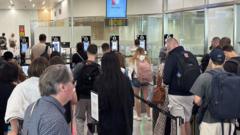
Ryanair, the Irish budget airline, has voiced serious apprehension regarding potential widespread travel disruptions across Europe, advocating that governments defer the introduction of a novel European Union border control framework. The carrier specifically requested a postponement of the Entry/Exit System (EES) until after the bustling summer holiday season, citing concerns about substantial queue chaos at border checkpoints.
Ryanair's apprehension primarily stems from the foreseen operational difficulties presented by the EES, a computerized IT platform intended to log non-EU nationals' movements whenever they traverse an EU external frontier. Although the initiative seeks to simplify border procedures and bolster security, the carrier worries its deployment might result in considerable hold-ups and overcrowding, particularly at key aviation hubs and maritime terminals during high-volume periods.
The Entry/Exit System aims to supersede the existing manual passport stamping process for non-EU visitors, by digitally documenting their arrival and departure dates. This transformation forms part of a wider drive to update border administration, enhance security through identifying individuals who overstay their visas, and more effectively monitor persons entering and exiting the Schengen area. Nevertheless, rolling out new technology on this extensive scale frequently encounters preliminary obstacles.
Ryanair's appeal highlights a prevalent apprehension across the travel sector: the risk that novel, unproven systems could generate choke points and passenger dissatisfaction. Given that millions of holidaymakers are anticipated to journey throughout Europe in the summer period, even minor technical hitches or sluggish processing could rapidly lead to extended waiting lines and forfeited transfers, affecting itineraries and the entire vacation experience.
Being a prominent airline managing countless routes throughout the continent, Ryanair possesses a significant stake in guaranteeing seamless and effective border procedures. Border disturbances directly influence their flight timetables, aircraft turnaround durations, and passenger contentment, rendering their involvement a distinct indicator of profound concern within the aviation industry concerning the EES's preparedness.
The EU's objective for the EES involves strengthening border security and operational efficacy, by furnishing a more dependable record of non-EU nationals' transit. Although the long-range advantages are evident, the pressing difficulty resides in guaranteeing a smooth shift that circumvents the very 'disorder' that detractors such as Ryanair foresee, particularly considering the intricate nature of coordinating its deployment across numerous member states.
European national authorities and the EU Commission are currently confronted with a quandary: weighing the imperative to advance with heightened border surveillance against the cautions from significant industry stakeholders regarding potential upheaval to the crucial summer tourism period. Opting for a deferral would afford additional time for trials and instruction, potentially lessening the hazards, yet it would also postpone a system engineered to bolster safety.
The result of this request for deferral will be meticulously observed by carriers, tour companies, and countless potential holidaymakers. It underscores the persistent conflict between enforcing stringent security protocols and preserving the unhindered flow of individuals, which is indispensable for tourism and financial vitality across the European Union.



Comments (0)
Be the first to comment.
Join the discussion