Revised Estimates Pinpoint Venus’s Mysterious UV Light‑Absorber
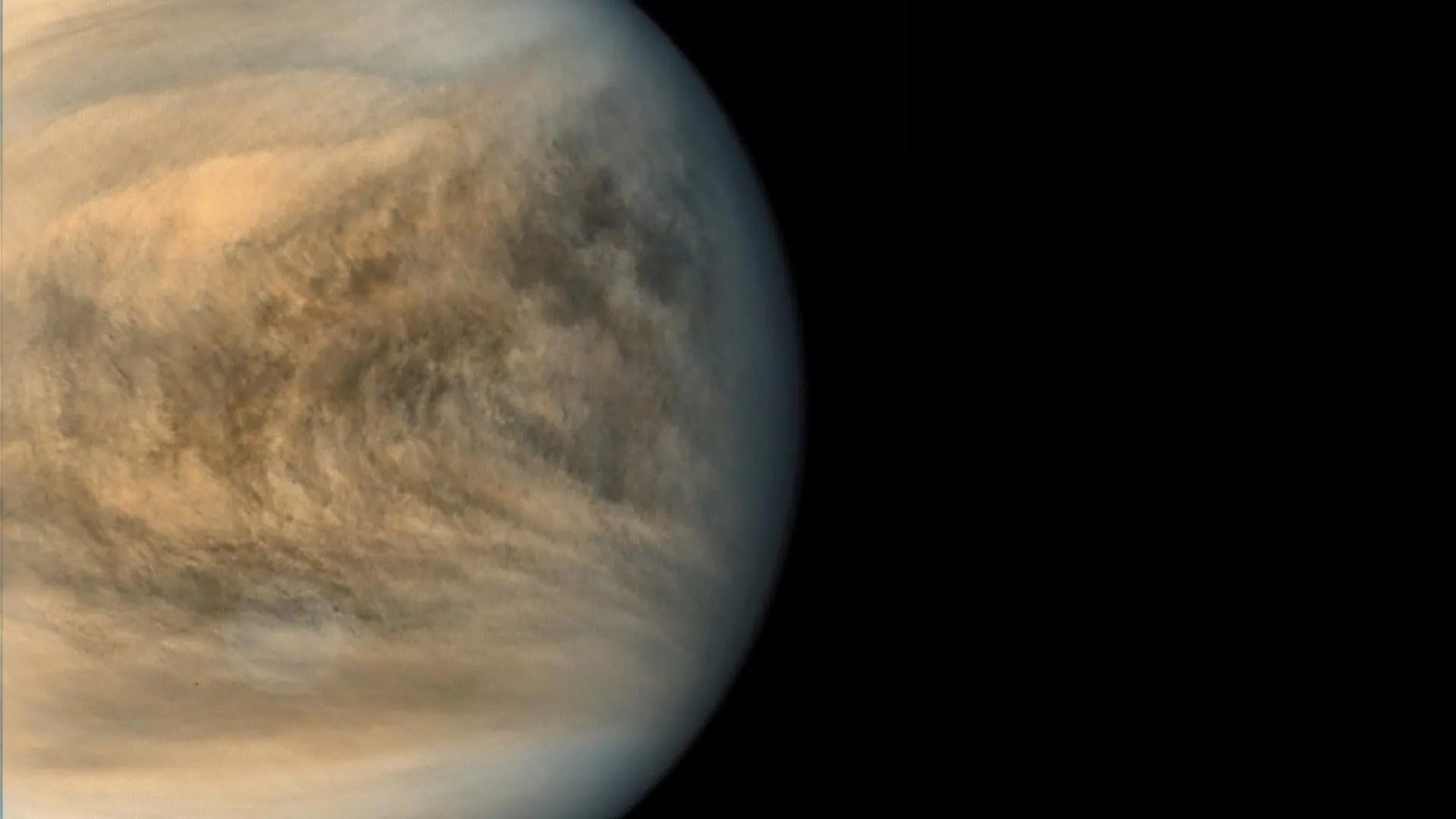
Researchers have measured how strongly the unknown compound that produces the dark UV stains in Venus’s pale‑yellow clouds absorbs light, sharply reducing the pool of potential candidates and providing future missions with a more precise objective.
For over a century, the dark UV markings have confounded astronomers. Whether observed from Earth‑bound telescopes or spacecraft, Venus’s upper cloud layer displays high‑contrast patches that soak up ultraviolet radiation, but the chemical cause has stayed hidden.
By employing radiative‑transfer models on the observed contrast, scientists derived the lowest absorption coefficient the material must have to generate the recorded darkness. The results indicate the absorber needs to be extraordinarily effective, with an absorption magnitude far exceeding that of many earlier proposed gases.
Consequently, a broad group of previously plausible candidates, like basic sulfur compounds with modest UV cross‑sections, are ruled out. The shortlist now comprises only a handful of strongly absorbing agents, such as specific sulfur allotropes, ferric chloride, or unknown complex organics capable of withstanding Venus’s severe acidity.
The discovery comes just as NASA’s VERITAS and ESA’s EnVision missions are gearing up for launch, each carrying spectrometers that can examine the ultraviolet range with unmatched accuracy. Armed with a specific absorption benchmark, the instrument teams can adjust their observation plans to test the trimmed roster of compounds during close flybys.
Upcoming efforts will merge laboratory spectroscopy of the remaining candidates with in‑situ data from any descent probes that may be sent. Pinpointing the UV absorber’s identity will not only settle a decades‑old puzzle but also refine models of Venus’s cloud chemistry, energy budget, and atmospheric dynamics.


Comments (0)
Be the first to comment.
Join the discussion