Researchers Caution That Limited Lunar Water May Undermine Permanent Settlement Plans
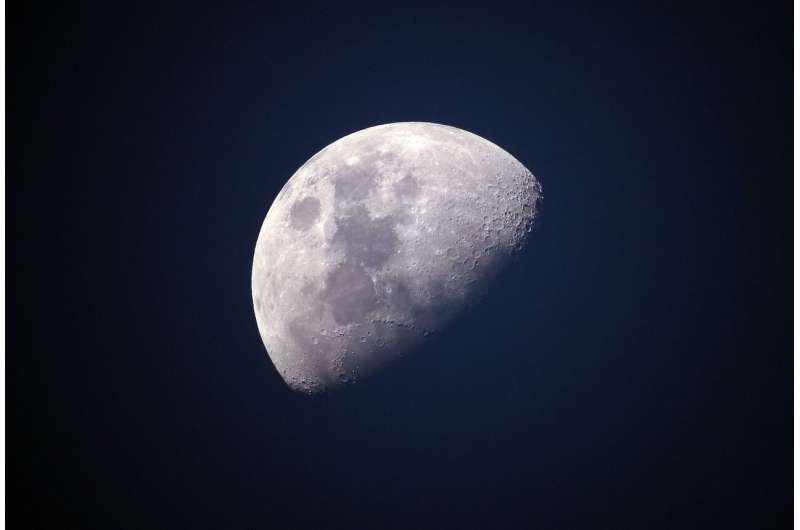
Recent studies verifying that the Moon’s polar craters hold only modest water quantities are dampening the excitement of both agencies and private companies that have been targeting the lunar surface as the upcoming arena for lasting habitats and industry.
Detected by remote‑sensing tools that picked up weak ice signatures in permanently shadowed zones, the finding reveals that water reserves are considerably smaller than earlier projections. Although ice unquestionably exists, the amount seems inadequate to support extensive human colonies without importing significant additional resources.
Following the inaugural confirmed finding of lunar water, a surge of concepts has been put forward to establish research stations, then villages, and ultimately full‑scale cities at the poles—areas where sunlight is constant and temperatures stay relatively stable. NASA’s Artemis initiative, commercial lunar‑landing projects, and a number of national space agencies have all drafted plans that depend heavily on locally sourced water for drinking, oxygen generation, and rocket propellant.
Specialists warn that retrieving and handling the scarce ice deposits may prove far more intricate and expensive than expected. The permanently shadowed craters maintain extreme cold—frequently under minus 170 °C—rendering mining technically demanding. Additionally, the sparse spread of ice implies that any extraction venture would face a fragmented resource field, likely necessitating several sites and substantial infrastructure.
Such limitations carry wider ramifications for the viability of a lunar economy. Should water prove unreliable on the Moon, the expense of ferrying it from Earth—or obtaining it via alternatives like hydrogen extraction from regolith—could render large‑scale development economically impractical. Detractors suggest that the “moon rush” might have to shift toward smaller, self‑sufficient habitats capable of functioning with restricted water supplies.
Looking forward, researchers and engineers intend to launch follow‑up missions that will chart the precise ice distribution and trial extraction methods on site. The results of those investigations will shape policy choices regarding the magnitude and schedule of upcoming lunar construction efforts. Until the water issue is settled, the prospect of thriving lunar metropolises stays conjectural, and focus may revert to treating the Moon chiefly as a scientific outpost and a launchpad for deeper space exploration.


Comments (0)
Be the first to comment.
Join the discussion