Reintroduced Curlews Breed on Isle of Sheppey, Marking Conservation Milestone
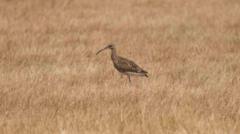
On the Isle of Sheppey, conservationists are marking a key achievement: curlews previously set free have now formed pairs and come back to a local nature reserve to nest. This progress indicates a positive outlook for the species' enduring revival in the area, suggesting that reintroduction initiatives are indeed cultivating self-sufficient populations.
The act of these uniquely long-billed wading birds returning to build nests signifies a vital advance, moving past simple survival. For birds initially released into an environment, the onset of breeding proves the efficacy of endeavors to restore and safeguard their habitat, thereby setting the stage for their populations to naturally expand.
The Eurasian curlew, which stands as Europe's largest wading bird, is readily identified by its memorable, bubbling vocalization and its elongated, downward-curving beak. Though once prevalent across diverse terrains, curlew numbers have substantially diminished in recent decades, mainly owing to habitat destruction, intensified farming practices, and pressure from predators. Presently, they are categorized as a species requiring significant conservation attention.
Positioned off the Kent coast in England, the Isle of Sheppey presents a varied array of essential habitats, encompassing saltmarshes, mudflats, and coastal grasslands, all critical for wading birds such as the curlew. Within the island, nature reserves offer secure refuges, carefully managed to sustain a wide range of wildlife, rendering them perfect locations for reintroduction initiatives.
Reintroduction endeavors of this nature generally employ a comprehensive strategy, involving the meticulous raising and release of juvenile birds, alongside substantial habitat stewardship to guarantee appropriate feeding and nesting areas. The current success highlights the commitment and methodical foresight poured into these enduring projects designed to counteract declining population trajectories.
The formation of breeding pairs serves as a promising sign for curlew conservation, extending its significance beyond the Isle of Sheppey to broader initiatives for protecting the species. Every successful nest enhances the genetic variety and robustness of the local populace, gradually restoring their numbers, one brood at a time.
Moving forward, continuous observation of these breeding pairs and their progeny will be essential. Subsequent actions will probably concentrate on enlarging suitable breeding areas, lessening dangers, and securing the enduring existence of this nascent population. Devotion to these emblematic birds emphasizes a larger ecological duty to uphold biodiversity.
This favorable development on the Isle of Sheppey powerfully reinforces the idea that focused conservation efforts, maintained consistently over time, can produce concrete and heartening outcomes for susceptible species, thereby paving the way for their lasting existence within our natural environments.


Comments (0)
Be the first to comment.
Join the discussion