Physicists Investigate If Space‑Time Is an Emergent Illusion Rather Than a Basic Fabric
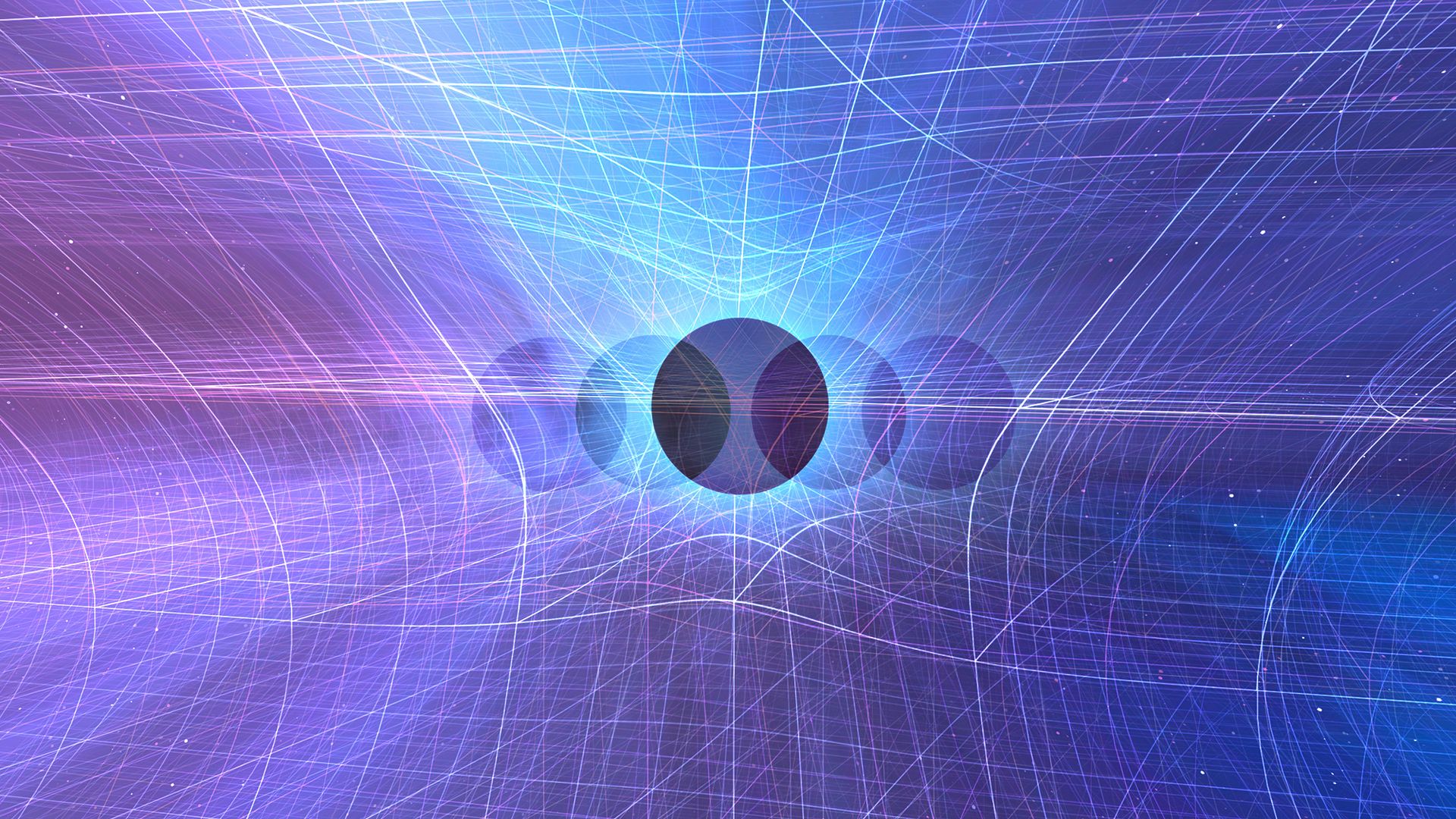
Researchers are ramping up attempts to examine the bold hypothesis that the everyday dimensions of space and time might not be elementary aspects of reality, but instead arise as emergent effects from a deeper, still‑unknown substrate. This concept overturns a hundred‑year‑old view that treats space‑time as the fixed arena for particles and forces.
Contemporary studies tap clues from quantum mechanics, black‑hole thermodynamics and the holographic principle, implying that data stored on lower‑dimensional boundaries might generate the three‑dimensional reality we perceive. Experimental initiatives—from ultra‑precise interferometers to high‑energy particle collisions—are being crafted to spot minute anomalies that would reveal a hidden pre‑geometric foundation.
This revived interest mirrors a growing unease over the clash between general relativity, which portrays space‑time as a smooth continuum, and quantum theory, which relies on probabilistic, discrete occurrences. Viewing space‑time as an emergent construct, scientists aim to reconcile the two and advance toward a single framework for gravity and quantum effects.
A number of theoretical models are presently being examined. Certain schemes propose that space‑time arises from webs of quantum entanglement, whereas others employ “tensor networks” to mathematically rebuild geometry from entangled information units. While the specifics vary, all these approaches forecast that at sufficiently tiny scales the usual ideas of distance and time cease to apply.
Should observational data confirming emergent space‑time appear, the consequences would echo across cosmology, particle physics and even philosophy, redefining our grasp of causality, locality and the essence of existence. Scientists warn that the area remains speculative, yet the blend of theoretical progress and improving experimental tools suggests the next ten years could be a pivotal era for fundamental physics.



Comments (0)
Be the first to comment.
Join the discussion