Panama Canal Limits Ship Traffic Amid El Niño Drought, Prompting International Trade Apprehension
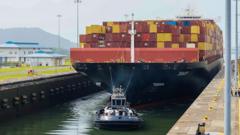
The Panama Canal, a vital conduit for international trade, is now imposing limits on the daily volume of vessels traversing its route. This action by the canal's managing authority stems directly from reduced precipitation levels throughout the area, a situation linked to the current El Niño climate phenomenon.
Levels in the freshwater lakes, which supply the canal's complex lock system crucial for moving ships between the Atlantic and Pacific, have dropped considerably. This shortage of water directly affects the canal's ability to operate, making fewer transits necessary to preserve the precious resource.
These newly introduced restrictions could mean extended delays for ships, possible diversion of freight, and higher operating expenses for the shipping sector. Considering the Panama Canal's central importance in worldwide logistics, linking key markets and enabling the flow of various items from consumer goods to energy supplies, any interruption has the potential to impact global supply chains broadly.
Operational for more than a hundred years, the Panama Canal functions with a sequence of locks that depend significantly on fresh water sourced from Gatun Lake and Alajuela Lake. These artificial lakes receive their replenishment from natural precipitation. When vessels navigate the canal, substantial volumes of water are discharged into the ocean with every lock sequence, thus rendering steady rainfall essential for its uninterrupted functioning.
El Niño describes a naturally occurring climatic event marked by elevated ocean surface temperatures in the tropical Pacific's central and eastern sectors. Such warming modifies atmospheric circulation patterns, producing notable shifts in global weather, frequently causing arid conditions in certain areas, Central America being one example.
Although the canal has encountered periods of drought before, the present El Niño occurrence highlights how increasingly susceptible vital global infrastructure is to climate fluctuations. Stakeholders continue to express considerable worry regarding the long-term repercussions for international trade pathways and the potential necessity for improved water management tactics or alternative resolutions.
The canal operator's decision emphasizes the precarious equilibrium between prevailing environmental circumstances and the requirements of worldwide trade. With climate patterns persistently shifting, essential maritime passages such as the Panama Canal are compelled to adjust to guarantee the sustained movement of commodities vital to the global economy.


Comments (0)
Be the first to comment.
Join the discussion