North Dakota Tracks Show T. Rex Walked at a Brisk Pace
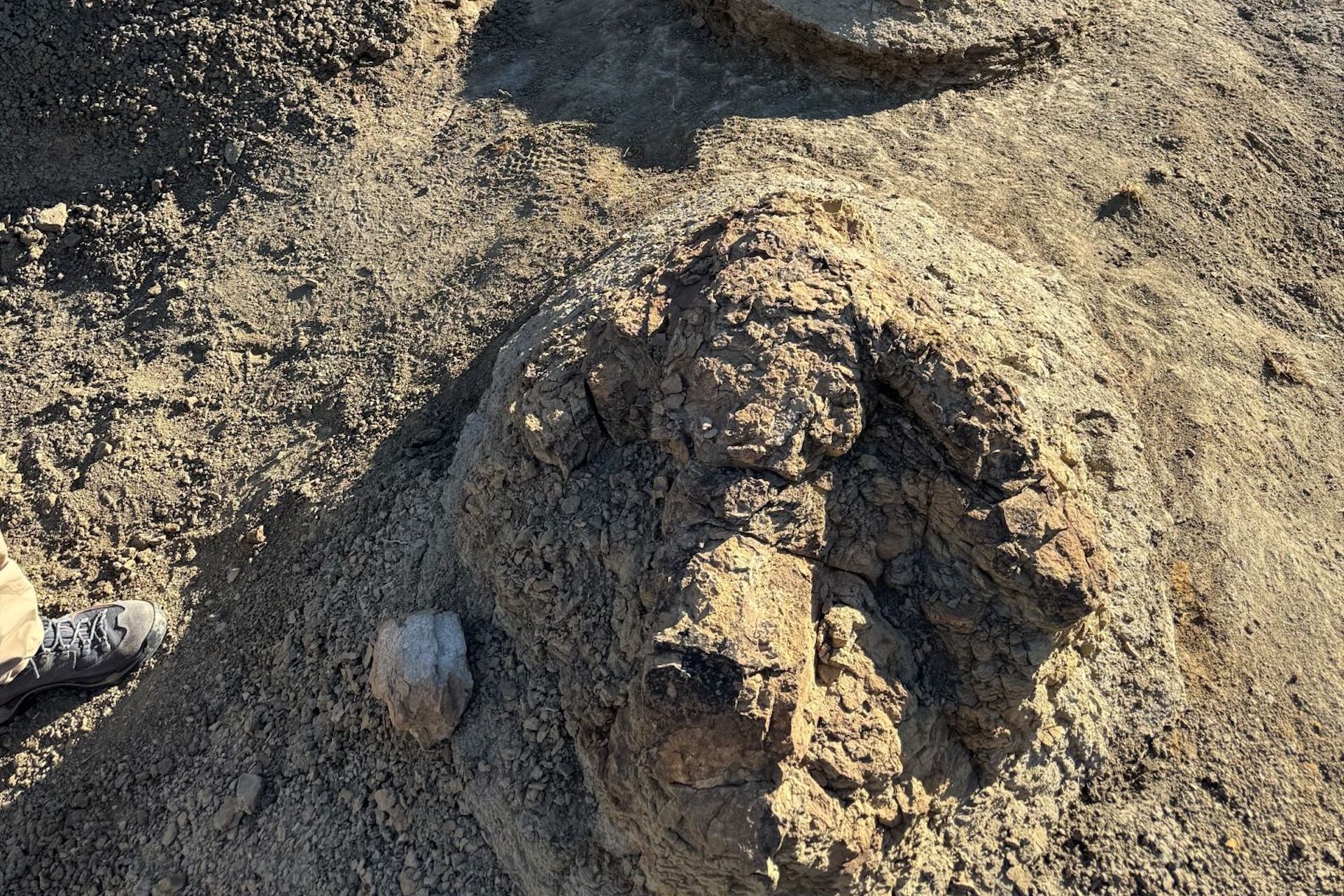
Researchers studying a series of massive dinosaur footprints in western North Dakota have determined that a mature Tyrannosaurus rex took steps about 13 feet long, a stride comparable to a human moving at a brisk walk.
The trackway, found in an isolated sedimentary outcrop, comprises a line of deep, well‑preserved prints that run straight. The dimensions of the impressions reveal a uniform stride length and a consistent gait, enabling scientists to gauge the animal’s speed without depending on skeletal reconstructions.
Applying standard equations that link stride length to hip height and locomotion speed, the team estimated the adult T. rex covered ground at roughly 3–4 miles per hour. Though this is considerably slower than the top speeds often depicted in popular media, it fits biomechanical models that suggest large theropods were built for endurance rather than rapid bursts.
This find contributes a rare data point to the scant record of T. rex trackways, which are far fewer than those of smaller carnivorous dinosaurs. By demonstrating that a predator of this magnitude could maintain a steady, moderate pace, the evidence helps paleontologists fine‑tune models of how such beasts hunted, migrated and interacted with their surroundings.
In addition to the speed calculation, the footprints shed light on the animal’s foot structure and weight distribution. Their depth and spacing indicate a balanced posture, with the massive hind limbs bearing the bulk of the load while the forelimbs likely stayed relatively still.
Scientists intend to analyze the surrounding strata further to determine the trackway’s age and to compare it with other North American theropod sites. As additional information emerges, the North Dakota prints could reshape prevailing ideas about the daily habits of one of Earth’s most iconic dinosaurs.


Comments (0)
Be the first to comment.
Join the discussion