New Analysis Shows Scottish Bog Bronze Boot Probably Celtic, Not Roman Spoils
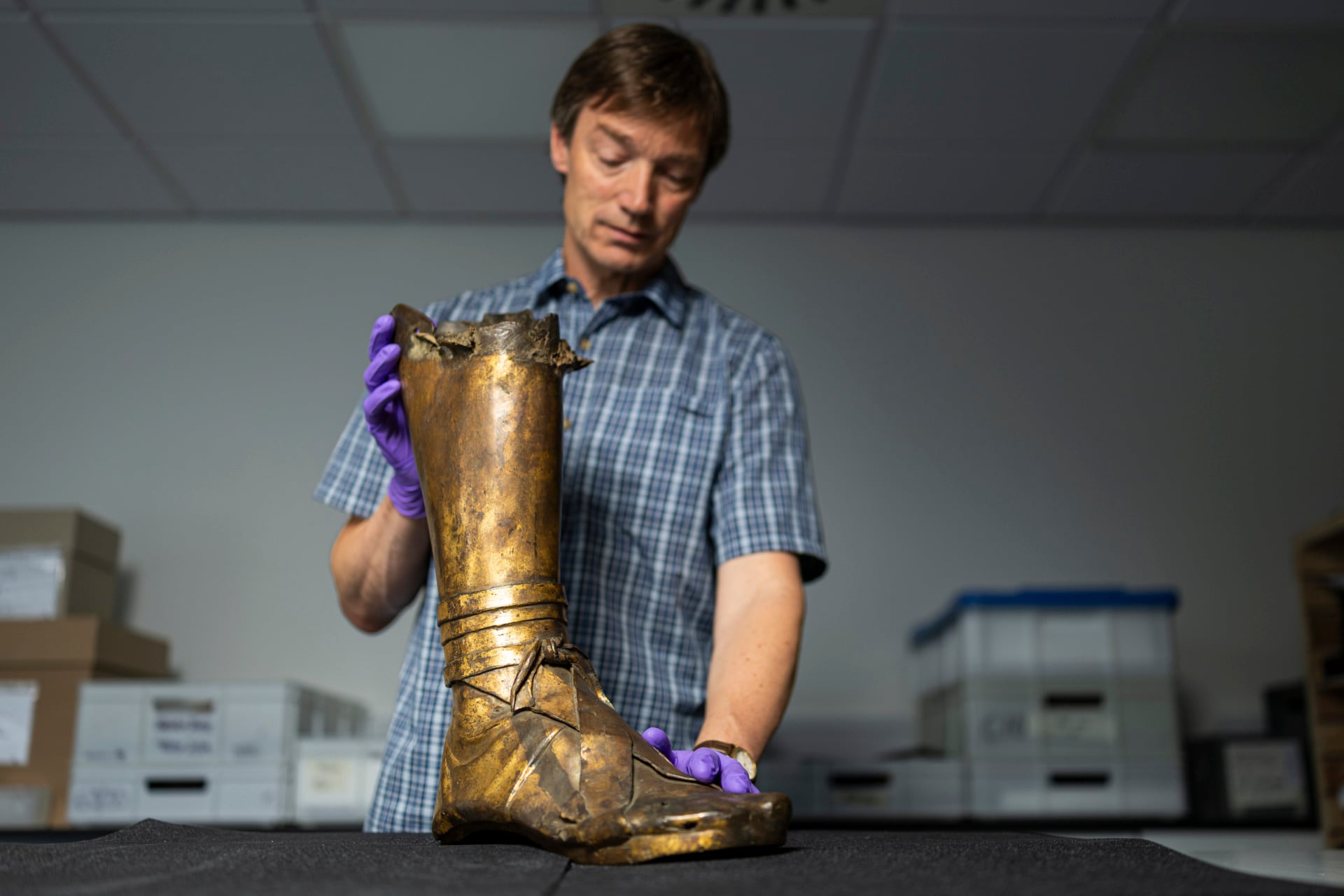
Cutting‑edge testing now challenges a 200‑year‑old notion that the huge gold‑leafed bronze boot unearthed from a Scottish peat bog was a pilfered Roman relic, indicating instead that it was fashioned locally and probably had a ritual role.
First discovered in the peat over two centuries ago, the boot has remained a fascination for European archaeologists. Its dimensions—big enough to envelop a man's foot and calf—and its dazzling gold‑leaf coating prompted early researchers to classify it as a Roman object, a view that endured in museum listings and popular accounts.
Scientists in a university metallurgical lab employed modern analytical techniques to examine the boot’s alloy makeup and casting signatures. Their results reveal a metal blend and production method that diverge from established Roman bronze practices, matching more closely the Iron Age Celtic metalwork recorded in other parts of Scotland. Radiometric analysis of the organic residues clinging to the boot also indicates a date later than the period of Roman rule in Britain.
Scotland’s peat bogs are famous for safeguarding objects that provide glimpses of prehistoric existence, and the boot conforms to that pattern. The ornate gilding and its monumental size imply it could have functioned as a votive offering or a prestige emblem in ceremonial processions, rather than as practical footwear. Comparable oversized metal artifacts have been unearthed at other bog locations, supporting the notion of a local tradition of placing valuable items in wetlands.
This reevaluation has consequences for museum displays of the boot and for wider stories about cultural interaction in ancient Britain. Curators will likely revise exhibit captions to incorporate the new view, and researchers look forward to additional comparative work with other Celtic metal discoveries. Although the boot’s precise role continues to be debated, the updated analysis highlights the value of employing contemporary methods to resolve enduring archaeological puzzles.



Comments (0)
Be the first to comment.
Join the discussion