NASA Set to Test X‑59 Quiet Supersonic Jet’s Noise Levels Later This Year
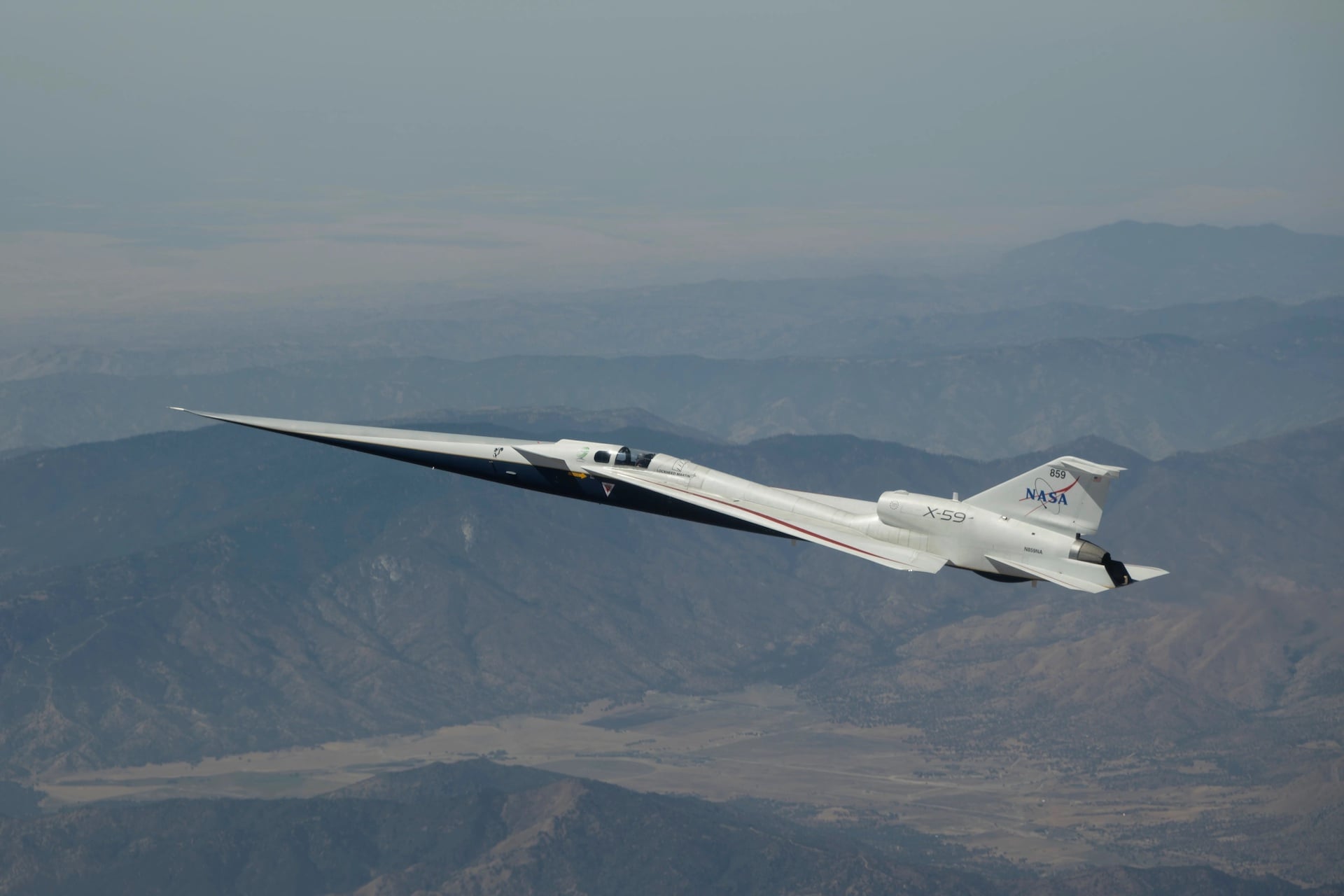
NASA said it will carry out a noise‑assessment of its X‑59 Quiet Supersonic Technology aircraft later this year, with the goal of quantifying how much quieter the prototype is than typical supersonic aircraft.
Constructed by Lockheed Martin for NASA’s Quiet Supersonic Technology program, the X‑59 is designed to convert the classic “sonic boom” into a gentler “sonic thump” by elongating the nose and shaping the fuselage so the shock wave is dispersed over a greater distance.
In the forthcoming trial, the aircraft will traverse a prescribed flight corridor while a network of ground‑based microphones captures its acoustic signature, giving engineers the chance to match field data against prior wind‑tunnel and simulation findings.
If the jet satisfies its noise objectives, NASA intends to forward the results to the Federal Aviation Administration, which is currently evaluating regulations that might one day permit supersonic flights over land. At present, commercial supersonic travel over populated regions is barred due to disruptive booms.
This initiative is part of a broader drive to resurrect commercial supersonic travel since the Concorde’s 2003 retirement. Analysts contend that a quieter plane is crucial for sustainable market routes, particularly within the United States.
Beyond the technical objectives, NASA plans to employ the X‑59 to gather data on public reactions to low‑level sonic events, insights that will inform future certification and regulatory frameworks.
The flight is scheduled for later this year, subject to final clearance. NASA officials note that the aircraft has already undergone extensive ground testing and a brief series of flight checks, positioning it for the acoustic measurement campaign.
Should the test confirm the design, it may pave the way for a second‑generation prototype and eventually a commercial model, potentially reopening trans‑oceanic routes at supersonic speeds without the noise penalties that ended earlier efforts.
Stakeholders will monitor the results closely, as they could represent a turning point for the supersonic sector and for regulators striving to balance technological advancement with community impact.



Comments (0)
Be the first to comment.
Join the discussion