Magnetically Guided Microrobots Boost Clot Breakdown Tenfold in Pig Trials
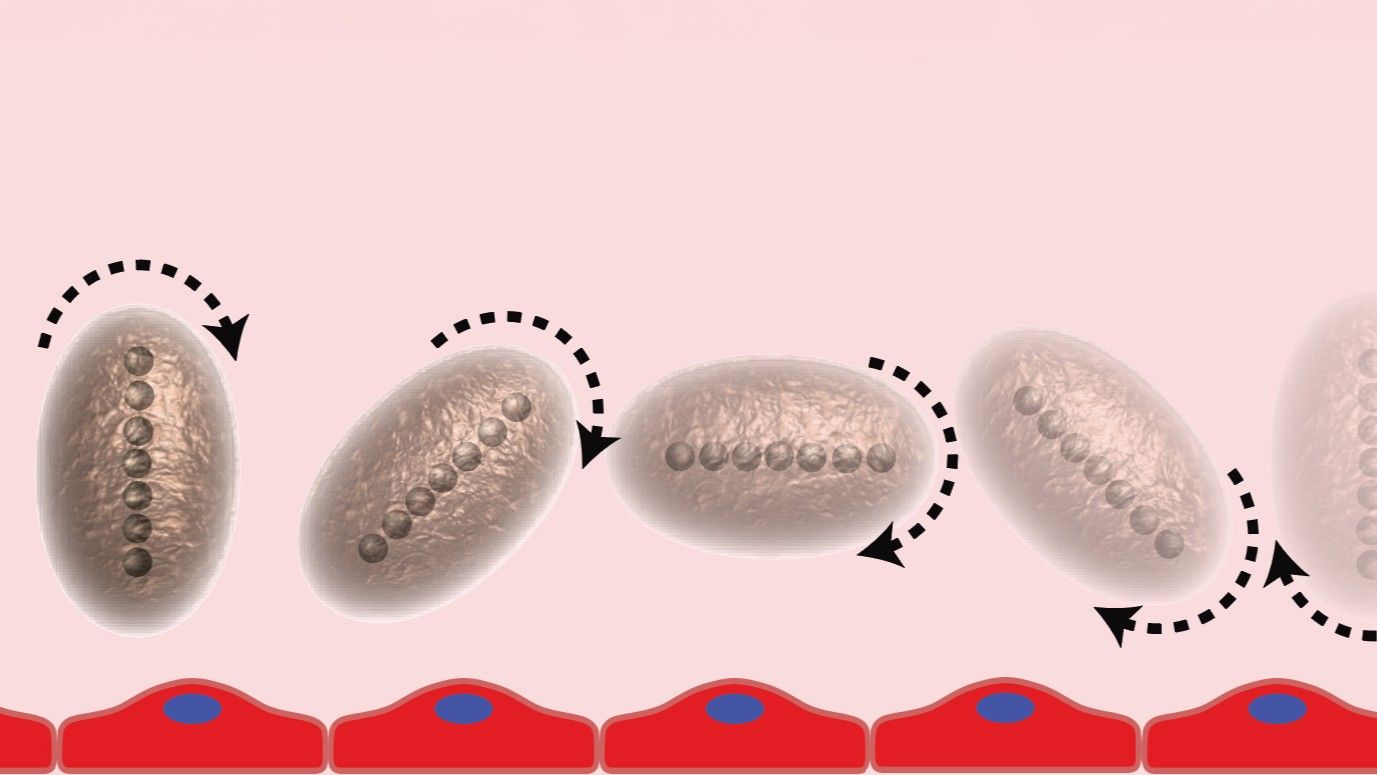
Researchers have shown that minute, magnetically steered robots can travel inside blood vessels and markedly hasten clot dissolution, with early pig experiments indicating breakup rates roughly ten times faster than conventional drug therapy alone.
The units, merely a few micrometres in size, are designed to tumble and roll when subjected to an external magnetic field. By tweaking the field’s intensity and direction, scientists can direct the swarm toward a blockage, where the robots function like tiny conveyor belts, channeling thrombolytic medication straight into the clot.
Today’s standard care for hazardous clots generally depends on systemic administration of clot‑busting drugs or invasive catheter procedures. Although effective in many instances, systemic dosing raises the risk of bleeding elsewhere, and catheters cannot always reach clots situated deep within the vascular network.
In the latest investigation, laboratory pigs were equipped with induced arterial clots that resemble those seen in stroke or heart‑attack patients. Following a routine dose of a thrombolytic agent, the magnetic microrobots were injected into the bloodstream and a controlled magnetic field was applied to steer them to the clot site. Imaging revealed the robots congregating around the obstruction and sweeping the drug into its core, achieving clot resolution in a fraction of the time required by drug treatment without robots.
This rapid clearance implies that microrobotic assistance could enable clinicians to lower drug dosages, potentially diminishing side‑effects such as hemorrhage while still attaining swift tissue reperfusion.
Despite the encouraging outcomes, several obstacles must be cleared before the approach can be considered for human patients. Researchers need to prove long‑term biocompatibility, guarantee that the robots can be safely eliminated from the body or rendered inert, and develop dependable magnetic navigation systems that operate across diverse patient anatomies.
The group intends to expand testing to larger animal models and to fine‑tune the magnetic control algorithms for greater targeting accuracy. Coupling the system with real‑time imaging techniques, such as MRI or ultrasound, could give clinicians immediate insight into robot location and clot status.
If these hurdles are overcome, magnetic microrobots could serve as a versatile platform for delivering therapeutics to hard‑to‑reach sites, not only for clot dissolution but also for targeted drug delivery in cancer, infection, or vascular repair, representing a notable advance in nanomedicine.



Comments (0)
Be the first to comment.
Join the discussion