Landmark Fossil Discovery Redefines Live Birth's Timeline in Mammal Ancestors
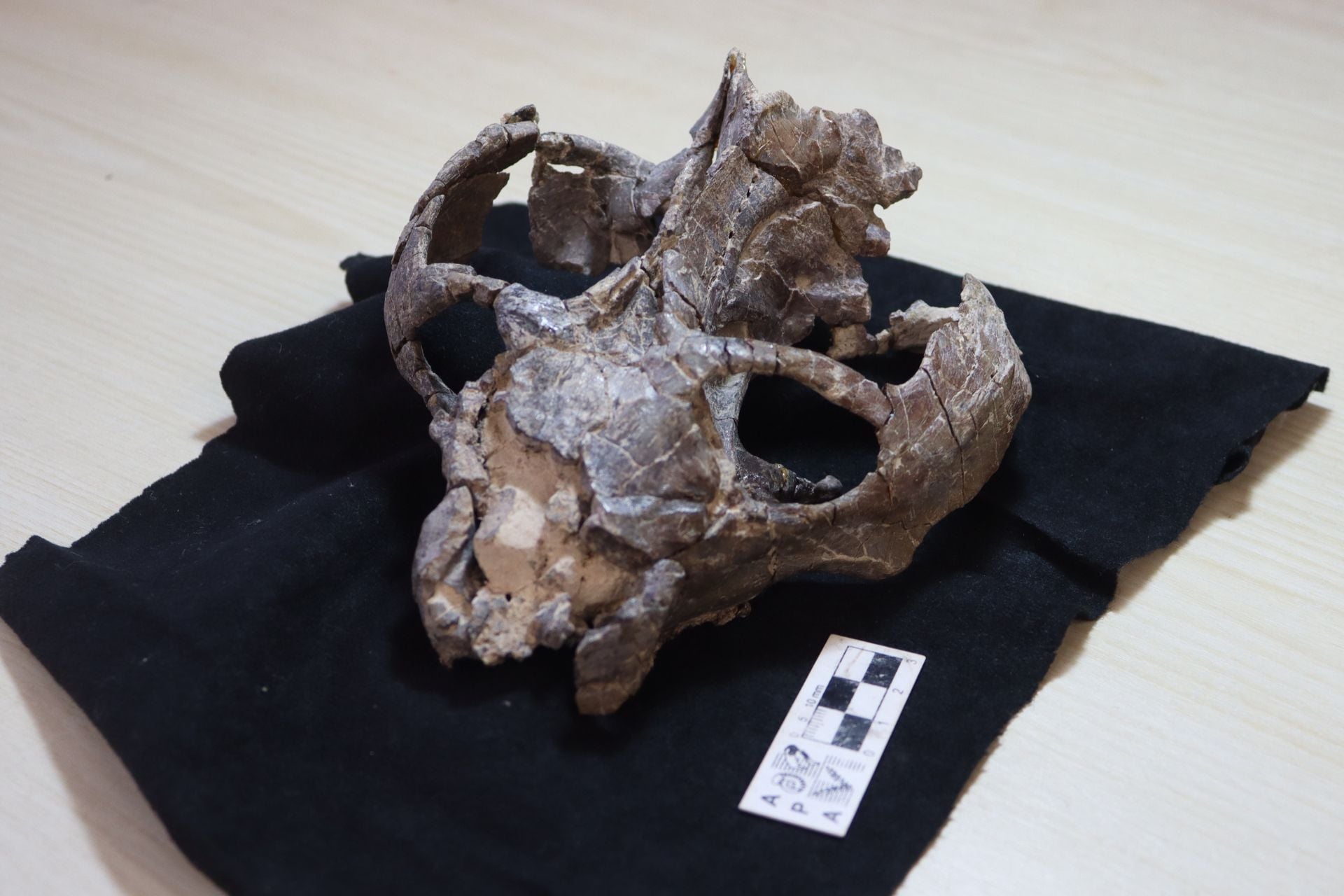
A recent scientific breakthrough has fundamentally altered a long-standing theory concerning the reproductive past of cynodonts, the ancient lineage from which all contemporary mammals descended. Scientists have uncovered the inaugural conclusive proof suggesting these beings, which inhabited Earth roughly 236 million years in the past, gave birth to live young, contradicting the prior supposition that their reproduction was solely through egg-laying.
For many decades, experts in paleontology and evolutionary biology posited that cynodonts, considered transitional forms between reptiles and mammals, reproduced via oviparity – that is, by laying eggs. This conclusion stemmed from analyses of the fossil record and comparative studies of other early vertebrates. Nevertheless, the recent discovery instigates a significant revision to this account, indicating that an essential mammalian reproductive characteristic manifested considerably sooner than previously believed.
This unprecedented evidence originates from a 236-million-year-old fossil, displaying unequivocal signs of internal embryonic development. Although the precise aspects of the fossil's state of preservation are still being examined, the finding of progeny contained within the maternal fossil structure unambiguously indicates viviparity, or the act of live birth, as opposed to egg deposition. This revelation represents a crucial landmark, being the initial instance where such direct proof has been documented within cynodonts.
This insight holds immense importance for comprehending the evolutionary path of mammals. Viviparity stands as a hallmark trait of the majority of contemporary mammals, providing benefits such as enhanced survival rates for young because of internal safeguarding and immediate parental nurturing. Identifying the point at which this reproductive approach first emerged in our ancient ancestry assists researchers in assembling the intricate jigsaw of how mammalian attributes progressed across immense spans of geological eras.
The transition from oviposition to viviparity signifies a profound evolutionary advancement. By illustrating that cynodonts had already adopted live birth, this finding extends the historical timeframe for the appearance of this sophisticated reproductive technique within the synapsid clade, the biological grouping encompassing mammals and their vanished kin. It proposes that certain reproductive tactics we now link with mammals were already present in their remote forebears.
The ramifications of this discovery reach further than merely reproductive biology, potentially reshaping our comprehension of parental investment, stages of development, and even the environmental roles filled by cynodonts. An organism capable of producing live young could have employed distinct survival mechanisms and engaged in different environmental interactions compared to one that deposited eggs and left them to incubate.
This monumental paleontological find incites a re-assessment of other cynodont fossil specimens and stimulates deeper inquiry into the variety of reproductive approaches among early mammal-like reptiles. Researchers are expected to meticulously examine current collections with renewed perspective, seeking extra indicators that could confirm or elaborate on this initial proof of live birth in our ancient progenitors, thereby further elaborating the complex chronicle of existence on Earth.



Comments (0)
Be the first to comment.
Join the discussion