Hubble's Red, White, and Blue Revelation: An Ancient Star Cluster and a Window to the Young Universe
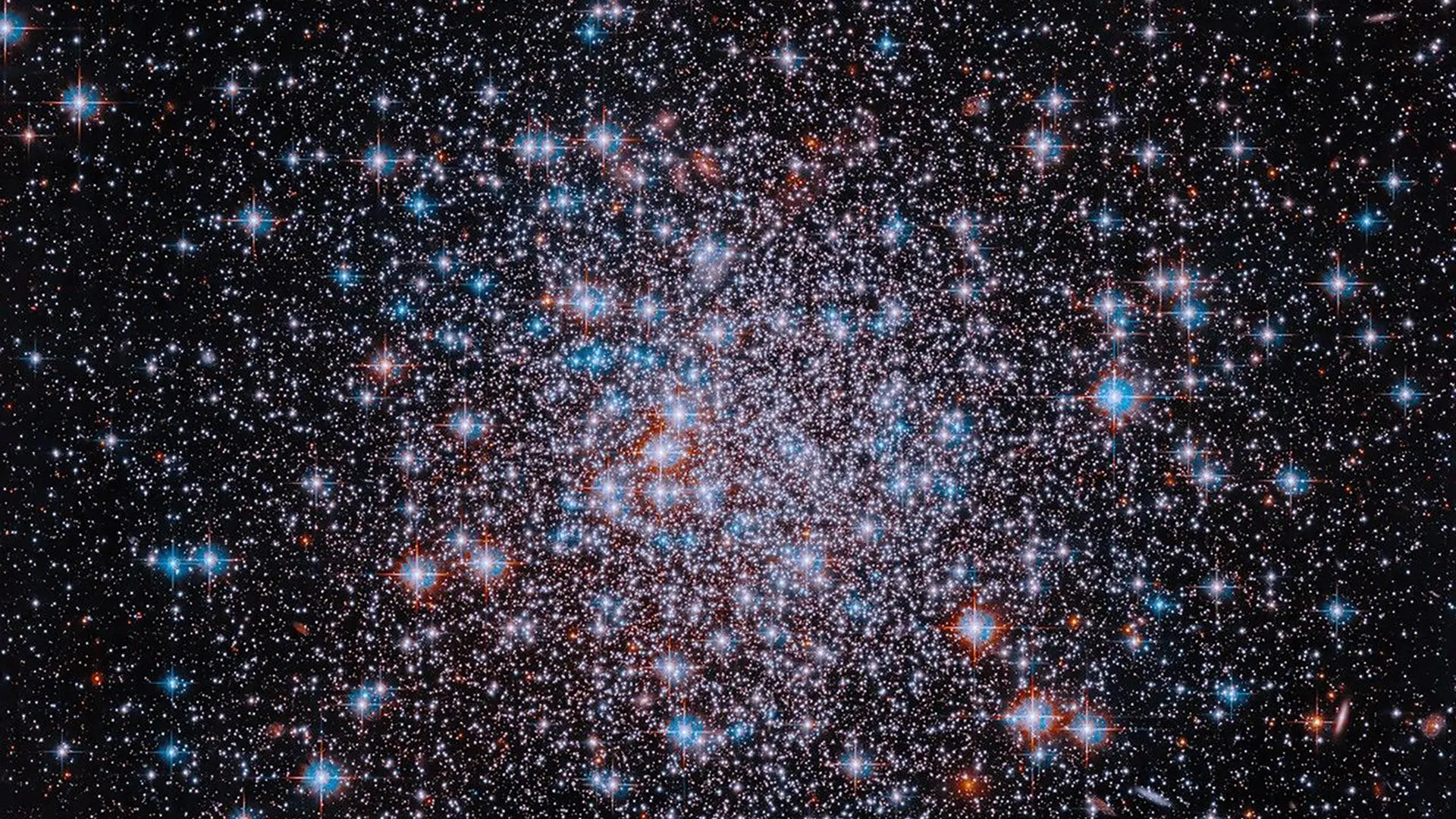
A breathtaking new image has been unveiled by NASA's esteemed Hubble Space Telescope, showcasing one of the Milky Way's most ancient star clusters in a vivid display of stellar colors, characterized as red, white, and blue. This remarkable cosmic scene was released as a celestial homage, timed with the nation's forthcoming 250th anniversary, delivering both stunning visual appeal and profound scientific understanding.
This photograph reveals a tightly packed assembly of stars, with each celestial body contributing to the cluster's composite coloring. The 'red, white, and blue' description of its color spectrum probably denotes the diverse categories and ages of stars comprising this ancient formation; typically, hotter, newer stars present as blue, whereas cooler, older stars lean towards red. The white coloration could stem from stars at different evolutionary phases or a mixture of light from various stellar temperatures, resulting in a visually engaging vista for researchers.
Beyond its visual charm, this venerable stellar assembly possesses considerable scientific importance. Scientists hypothesize that vital insights into the universe's embryonic stages lie concealed within its core. Investigating these foundational clusters enables astronomers to look into the past, offering a glimpse into the circumstances and mechanisms prevalent in the much younger cosmos.
A pivotal focus of study within these clusters concerns the function of supernovae, or exploding stars. These potent stellar demise events are more than just destructive occurrences; they serve as cosmic mechanisms that create and distribute heavier elements across the universe. Had it not been for the elemental enrichment supplied by supernovae in the nascent universe, the fundamental components required for planetary formation, and eventually life itself, would have been absent.
Hubble's persistent capacity to distinguish individual stars within these remote and primeval formations highlights its lasting impact as a leading astronomical observatory. For more than three decades, the telescope has reliably provided pioneering observations, expanding the limits of our comprehension regarding galactic development, star life cycles, and the genesis of the universe.
The continuous examination of these findings contributes to an expanded grasp of how our galaxy and the wider universe have developed since the Big Bang. Every fresh image from Hubble, especially those depicting such archaic and significant celestial bodies, contributes another segment to the intricate enigma of cosmic history, leading scientists toward a more exhaustive depiction of humanity's position in the immense universe.


Comments (0)
Be the first to comment.
Join the discussion