Hubble Reveals Brilliant Half-Million Star Cluster, Offering Clues to Milky Way's Genesis
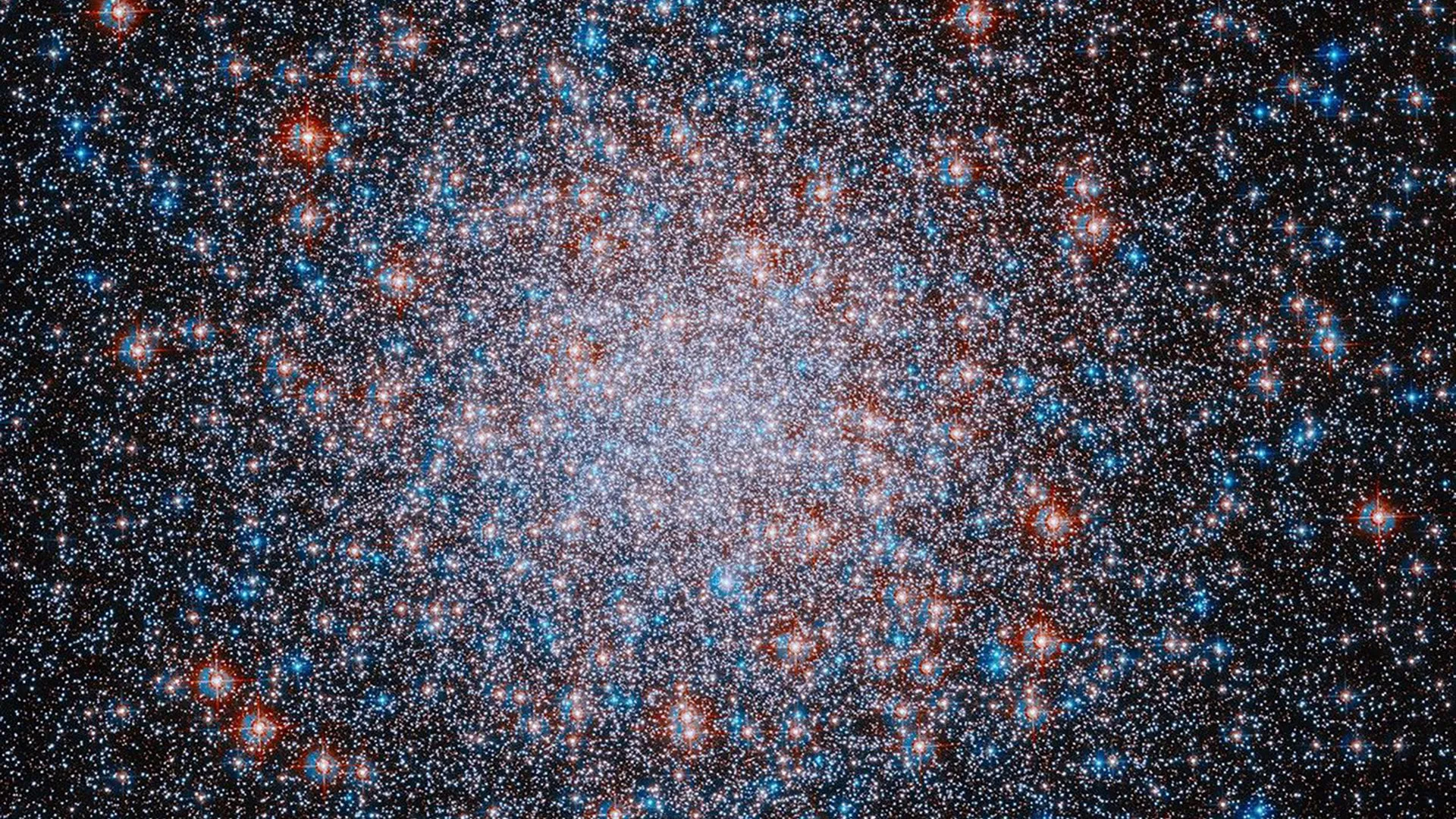
Commemorating the United States' 250th anniversary, NASA has released a magnificent new image from the Hubble Space Telescope. This impressive depiction showcases Messier 3, an ancient globular cluster containing over 500,000 stars, serving as both a spectacular visual display and a crucial scientific asset.
Situated in our galactic neighborhood, Messier 3 stands as one of the most ancient and expansive globular clusters identified. These tightly packed, spherical stellar groupings are believed to be vestiges from the universe's formative years, harboring some of the very first stars. The exceptional resolution of Hubble enables astronomers to distinguish individual stars within this 'star-spangled sea,' thereby exposing its complex arrangement and vast dimensions.
Beyond its visual splendor, this concentrated stellar collection holds significant importance for scientific investigation. Scientists are utilizing data from Messier 3 to reconstruct the intricate past and development of our galaxy, the Milky Way. Examining the properties of stars within these primeval clusters allows researchers to infer the environmental conditions that existed billions of years in the past.
A fundamental element of Messier 3's scientific value stems from its array of uncommon stars. These distinct stellar categories provide vital insights into stellar life cycles and the universe's chemical composition changes throughout history. Their existence and arrangement within the cluster offer astronomers a celestial testing ground for hypotheses concerning stellar evolution and galaxy genesis.
The ongoing functionality of the Hubble Space Telescope, a joint venture of NASA and the European Space Agency, continues to be indispensable for these profound space observations. Regardless of its operational longevity, Hubble consistently provides high-resolution imagery that is crucial for broadening human comprehension of the cosmos, spanning from close-by planets to remote galaxies and, as demonstrated here, ancient star clusters.
Investigations into globular clusters such as Messier 3 aid scientists in grasping the formation and evolution processes of galaxies like the Milky Way. These clusters are frequently regarded as 'fossils' from the nascent universe, safeguarding environments and star populations that have undergone significant alterations elsewhere in the galaxy. Knowledge derived from Messier 3 can enhance theoretical models describing the Milky Way's original genesis and subsequent progression.
With astronomers persistently examining the extensive data gathered by Hubble, the prospect of novel findings within Messier 3 continues to be substantial. Every meticulous observation not only enriches our collection of cosmic imagery but also advances our knowledge of the universe's history, current state, and future trajectory, thereby solidifying the enduring impact of this extraordinary space observatory.


Comments (0)
Be the first to comment.
Join the discussion