EU's Upcoming Border System Could Triple Passport Wait Times, Sparking Summer Travel Worries
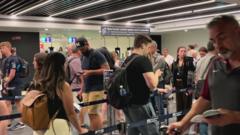
Those planning trips to Europe this summer may encounter considerable hold-ups at passport control, with forecasts indicating a new European Union border system could triple current processing durations. An unnamed airport official has expressed apprehension regarding the implications of these revised protocols, a view shared by budget airline Ryanair, which has likewise cautioned its customers.
These forthcoming modifications, referred to as an updated EU border framework, aim to bolster security and rationalize the process for non-EU citizens entering and exiting the Schengen Area. While the system details entail novel digital inspections and data capture for individuals from outside the Union, its real-world consequence for air hubs and passengers seems to be a marked escalation in the duration spent at border stations.
The forecast of passport control times tripling implies that a procedure previously taking five minutes could now extend to fifteen minutes or longer for each person. This kind of escalation, especially during busy travel seasons, carries the risk of generating extensive lines, leading to missed connecting flights, and significantly heightening the stress associated with travel for countless individuals.
Ryanair, a prominent carrier managing extensive flight paths into Europe, has proactively moved to counsel its clientele to anticipate prolonged waiting periods. This advisory from a significant industry participant highlights the gravity of the expected upheaval and indicates that these worries are probably not confined to one airport or area but will likely be prevalent throughout EU points of entry.
The introduction of these alterations is especially problematic, aligning with the bustling summer vacation period. Millions of global tourists generally converge on European locales during these months, implying the revised system will face considerable strain. Airports and carriers are now confronted with the task of overseeing passenger movement and managing expectations during what is typically their most active stretch.
Experts in the sector propose that airport administrations and airlines will be required to deploy measures to alleviate the consequences, including urging passengers to get to their flights considerably earlier. There could also be demands for more personnel at passport control counters and improved public awareness drives to guarantee travelers are completely informed of the updated stipulations and possible delays prior to commencing their trips.
With summer drawing nearer, attention will turn to the proficiency with which European airports and border authorities can adjust to the novel system while sustaining smooth operations. The cautions issued by an airport leader and Ryanair act as a preliminary sign of the obstacles forthcoming, prompting both officials and travelers to get ready for what could be a lengthier transit through European frontiers.



Comments (0)
Be the first to comment.
Join the discussion