Early Peat Fires Sparked by El Niño Accelerate Indonesia’s 2026 Fire Season
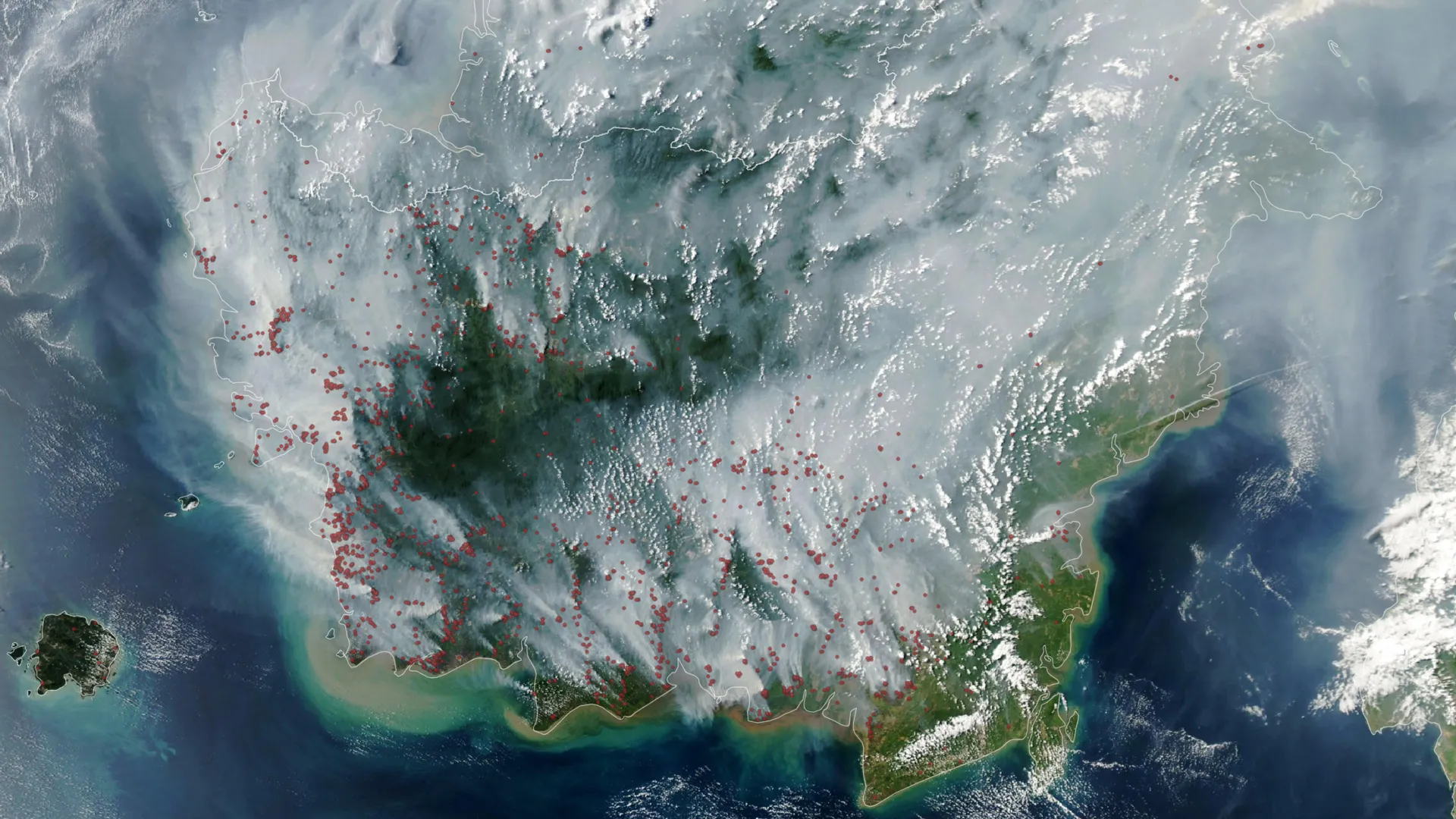
Indonesia is facing an early rise of underground peat blazes as the 2026 fire season kicks off, driven by a strengthening El Niño and a severe drought that has left wetlands bone‑dry. Satellite observations this month reveal a rapid increase in hot spots across Sumatra, Kalimantan and Papua, showing that fires are igniting below the surface weeks before the usual seasonal peak.
Peatlands, made up of centuries‑old organic material, are especially vulnerable to smoldering combustion. When the water table drops, the peat dries out and can catch fire without visible flames, continuing to burn underground for weeks or even months. This concealed nature makes the fires hard to spot and suppress, while the slow, oxygen‑starved burn releases large amounts of fine particulate matter and volatile organic compounds that are far more hazardous than smoke from surface fires.
The health and environmental ramifications are significant. Fine particles (PM2.5) produced by peat fires can travel hundreds of kilometres, degrading air quality in major Indonesian cities and neighboring nations. Residents report a rise in respiratory problems, and the haze forces school closures and lowers labor productivity. From a climate standpoint, the carbon stored in peat—estimated at up to 30 percent of the world’s soil carbon—is rapidly emitted, adding a potent greenhouse‑gas source to an already warming atmosphere.
Typically, Indonesia’s fire season peaks between August and October, when the dry spell coincides with land‑clearing activities. This year, however, an early drought onset combined with an unusually strong El Niño has moved the timeline forward, allowing fires to start as early as May. Comparisons with the 2015 and 2019 crises—years marked by severe haze—indicate that the present conditions could generate an impact of similar or greater magnitude if containment measures fail.
Authorities have deployed fire‑fighting crews, aerial water drops, and community alert systems, yet the subterranean character of peat combustion curtails the success of traditional suppression methods. International agencies are keeping watch, and scientists emphasize that restoring peat hydrology—through re‑wetting initiatives and stricter land‑use enforcement—remains the most dependable long‑term mitigation approach. As the season unfolds, the path of these hidden fires will determine regional air quality, public‑health outcomes, and Indonesia’s share of global carbon emissions.


Comments (0)
Be the first to comment.
Join the discussion