Chinese Team Breaks Optical Fiber Record, Hits 3.2 Petabits per Second
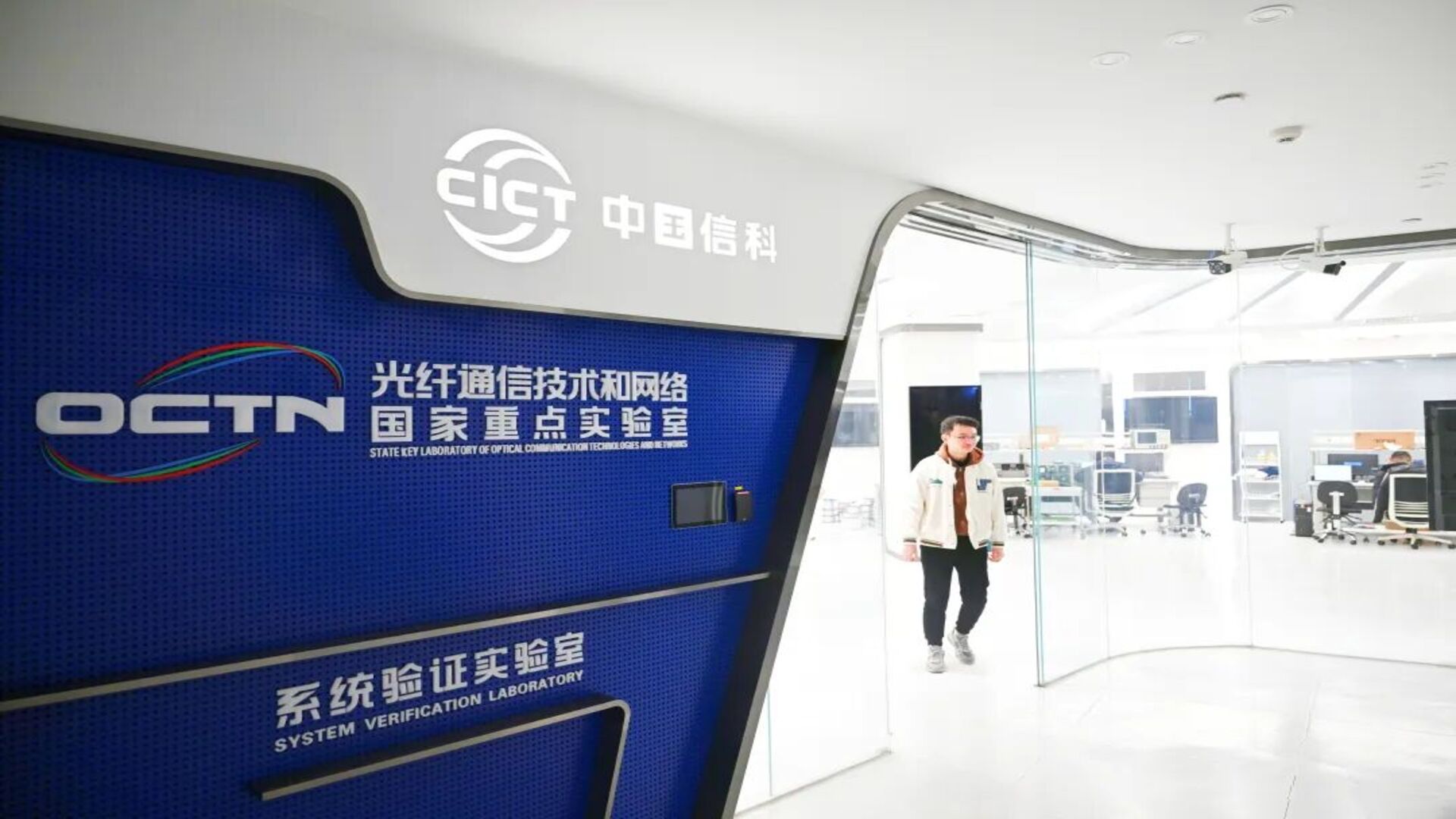
Researchers from China reported a landmark in data transfer, maintaining a continuous flow of 3.2 petabits per second (Pb/s) through a single optical fiber—a speed that could download over 20,000 4K movies in the blink of an eye.
The experiment used a 24‑core fiber, assigning an independent data stream to each core via spatial division multiplexing (SDM). This spatial separation allowed the team to amplify a lone strand’s capacity without adding extra physical fibers.
To push the throughput even higher, the scientists applied a combined S‑band, C‑band, and L‑band (S+C+L) wavelength arrangement, distributing the data across three separate spectral windows. The multi‑band technique curtails interference while extracting the maximum usable bandwidth from each core.
Although this lab‑based showcase is not yet ready for commercial rollout, it represents a notable advance toward satisfying the relentless appetite for ultra‑fast connectivity. Today's data centers, cloud platforms, and budding technologies like virtual reality and massive scientific simulations all demand ever‑wider data pipelines.
Analysts point out that existing submarine cable networks usually run in the tens‑of‑terabits‑per‑second band, a far cry from the petabit magnitude achieved in the Chinese trial. Expanding this technology might reduce the fiber count required for upcoming trans‑ocean connections, cutting expenses and streamlining network design.
While the team withheld many technical specifics, they confirmed that the record was set in a controlled lab environment employing sophisticated modulation schemes and error‑correction algorithms. Future efforts will aim at boosting reliability, lowering power usage, and melding the multi‑core fibers with current networking gear.
Should this method prove practical outside the lab, it could redraw the blueprint for next‑generation internet infrastructure, permitting swifter intercontinental data exchange and bolstering the data‑heavy services that drive today’s economies.



Comments (0)
Be the first to comment.
Join the discussion