China Court Orders Bubble Tea Company to Pay Louis Vuitton $1.5 Million for Design Infringement
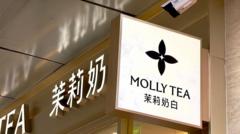
Molly Tea, a bubble tea enterprise, has been ordered by a Chinese court to compensate luxury brand Louis Vuitton with $1.5 million due to its unauthorized use of the fashion house's well-known four-petal flower design. This decision represents a significant step forward in the protection of intellectual property rights within China's booming consumer sector.
The court's judgment explicitly determined that Molly Tea had employed a design bearing excessive similarity to Louis Vuitton's unique pattern. This act of infringement led directly to the substantial monetary fine, highlighting the legal repercussions awaiting companies that copy protected trademarks and designs.
This result underscores an increasing inclination within China's legal framework towards more rigorous safeguarding of intellectual property, especially for global brands. For a long time, luxury companies have contended with issues of counterfeiting and design copying in the Chinese market, making this verdict a considerable triumph for initiatives aimed at brand security.
As a global leader in luxury commodities, Louis Vuitton depends profoundly on its distinct aesthetic and corporate identity, which are inextricably tied to its famous patterns and emblems. These designs serve not merely as embellishments but are fundamental to the brand's perceived value, unique status, and competitive edge in the marketplace.
Molly Tea, a significant participant in China's rapidly expanding bubble tea sector, operates in an entirely distinct field yet still encountered legal proceedings concerning its design selections. This litigation demonstrates that intellectual property conflicts can emerge across a wide array of industries, spanning from haute couture to widely consumed drinks.
This judgment acts as a potent admonition to companies conducting business in China regarding the imperative of honoring existing intellectual property. With the market's ongoing maturation and the rise in consumer purchasing power, the legal framework is progressing to offer stronger protections for innovators and brand proprietors.
A penalty of this magnitude could motivate other local firms to apply increased scrutiny in their design creation and brand building efforts, thereby avoiding any potential infringement upon safeguarded intellectual property. It solidifies the understanding that misappropriation of designs leads to concrete and expensive consequences.
The decision is anticipated to reverberate across the industry, indicating a more explicit dedication from Chinese judicial bodies to maintaining international intellectual property norms. This has the potential to cultivate a more dependable and inventive commercial ecosystem for both domestic and international ventures.


Comments (0)
Be the first to comment.
Join the discussion