Bronze Signet Depicting Alexandria's Pharos Recovered from Ocean Floor
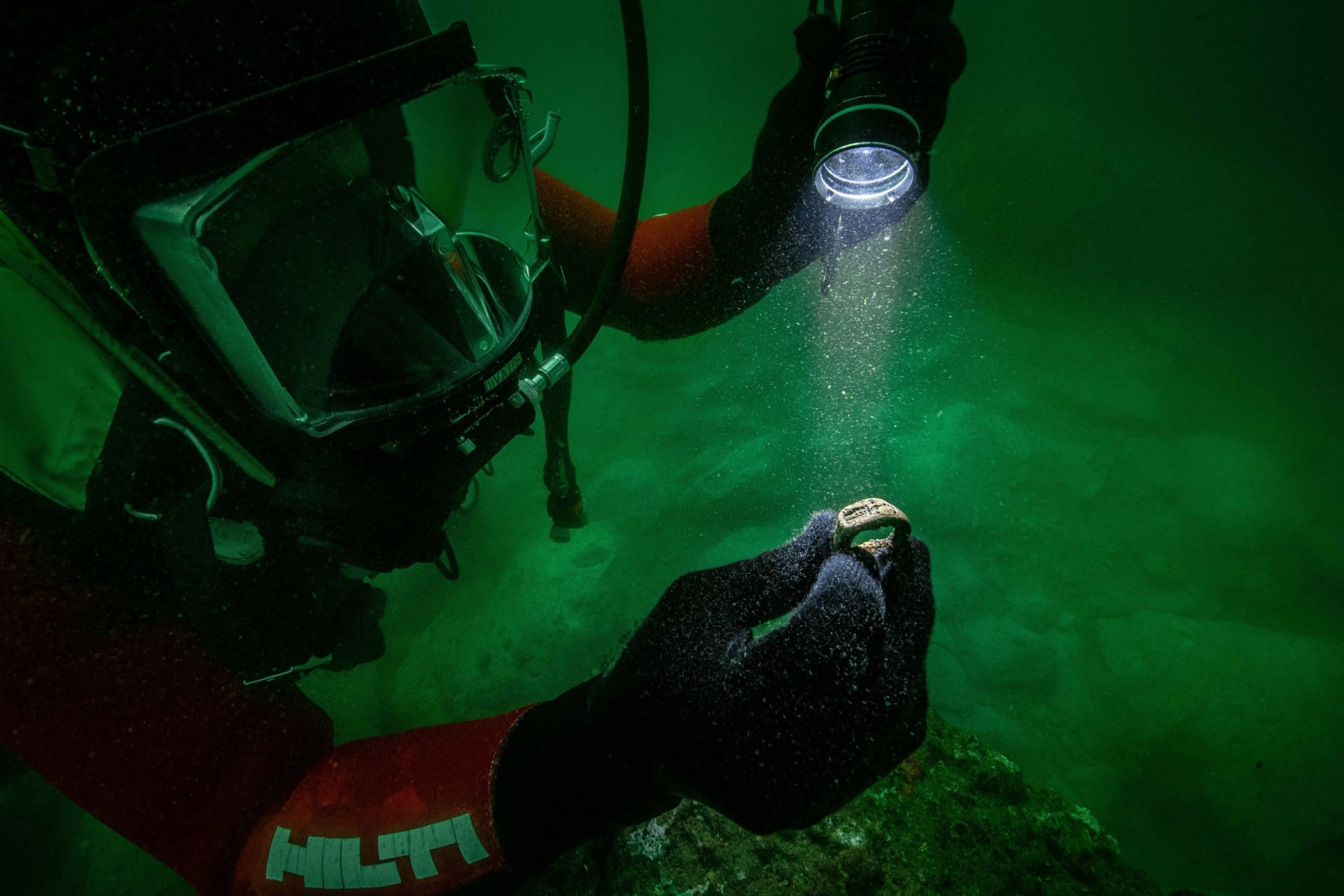
A team of marine archaeologists has pulled from the sea a unique bronze signet ring that carries an engraving of the renowned Lighthouse of Alexandria, representing the first artifact of its type to emerge from underwater.
The ring, retrieved from a shipwreck off Egypt’s coast, displays a finely‑crafted relief of the lighthouse—also called the Pharos—that once steered vessels into Alexandria’s harbor. Researchers point out that the structure, erected in the third century BCE under Ptolemy II, ranked among the Seven Wonders of the Ancient World and has frequently appeared on art and coinage, yet a personal object bearing its image is without precedent.
Scholars believe the bronze signet served as a notarizing instrument, a portable seal for authenticating official paperwork. In ancient times such rings were impressed into soft wax or clay to leave a distinctive mark, confirming the owner’s authority. The lighthouse design could reflect the wearer’s ties to the city’s maritime bureaucracy or a wish to associate with the beacon’s symbolic weight.
The find highlights the expanding role of underwater archaeology in retrieving items lost to shipwrecks, coastal erosion, and changing sea levels. Investigators used sonar surveys and remotely operated vehicles to pinpoint the debris field before delicately extracting the ring. Conservators are now treating the bronze, which shows corrosion but remains legible enough for detailed analysis.
Although the ring’s precise origin is still unknown, its style matches Hellenistic metalwork, and its bronze alloy corresponds to those documented in the Mediterranean between the 3rd and 1st centuries BCE. Researchers aim to refine its dating through metallurgical testing and comparative iconography, possibly linking it to a particular administrative office in Alexandria.
The discovery has attracted the attention of scholars studying ancient bureaucracy, who view the signet as a concrete illustration of how documentation and authority functioned in a busy port city. While the lighthouse has long been examined through texts and archaeological fragments, this personal object adds a human dimension, suggesting it may have been owned by a clerk, merchant or official navigating the same waters.
Future efforts will concentrate on publishing the results in a peer‑reviewed journal, conducting a thorough survey of the surrounding wreckage, and investigating whether other similarly marked artifacts lie beneath the waves. As the signet undergoes further study, it promises to enrich our knowledge of the everyday tools that underpinned the administration of one of antiquity’s greatest urban centers.



Comments (0)
Be the first to comment.
Join the discussion