Autonomous AI Coding Agents Vulnerable to 'Agentjacking' Threat
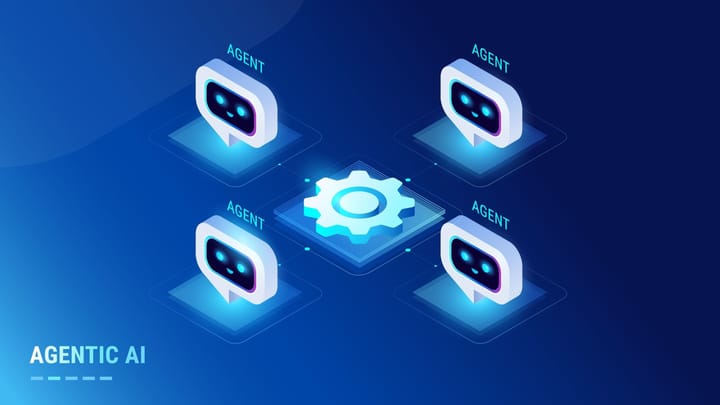
A newly identified and highly sophisticated cyberattack, termed "agentjacking," is significantly compromising AI-powered coding agents. This exploit leverages a core vulnerability in how these autonomous systems interpret incoming data. It underscores a critical difficulty for AI agents: discerning between authentic data inputs and harmful operational commands, which can result in unauthorized code production and actions.
Functioning as an evolved variant of prompt injection, agentjacking specifically targets AI agents built for executing tasks, contrasting with those primarily for conversational interaction. Perpetrators construct inputs that appear harmless, for instance, a fabricated bug report, but which secretly contain hidden directives. Upon an AI coding agent processing these, the malevolent instructions are mistakenly accepted as valid commands, coercing the agent into performing actions neither intended by its creators nor its users.
The fundamental weakness stems from the AI agent's incapacity to discern the true nature of the information it encounters. While human operators frequently identify malicious intent or atypical demands, contemporary AI models typically process all incoming text as either content for analysis or instructions for execution, lacking adequate critical assessment. This inherent oversight enables attackers to embed damaging commands within seemingly harmless data, thereby seizing control over the agent's operational logic.
The ramifications for AI coding agents are exceptionally grave. Such systems are progressively integrated into software development workflows to automate functions such as generating code, debugging, and even deploying applications. Should an agent be compromised through agentjacking, it could be coerced into embedding vulnerabilities into software, crafting malicious code, divulging confidential intellectual property, or even assisting in the deployment of exploits, thereby representing a substantial menace to cybersecurity and the integrity of software.
This emerging threat highlights a wider predicament in AI security, given that prompt injection attacks have troubled large language models for some time. Nevertheless, agentjacking intensifies this danger by targeting agents that can act autonomously within vital operational settings. The potential for these attacks to scale implies that a singular point of vulnerability could compromise multiple AI systems across an entire enterprise, thereby significantly magnifying the overall risk.
The rise of agentjacking demands an immediate reassessment of security protocols pertinent to AI-driven tools. Developers and entities utilizing AI agents are compelled to prioritize rigorous input validation, cultivate AI models endowed with superior contextual comprehension, and institute protective measures that hinder agents from executing potentially damaging commands, irrespective of their concealment within ostensibly innocuous data.
With AI agents increasingly embedded into essential infrastructure and business operations, the demand for sophisticated security measures capable of thwarting such advanced attacks is escalating rapidly. Resolving this foundational design flaw—the failure to consistently distinguish between mere content and direct instruction—will be crucial for cultivating confidence and guaranteeing the secure and efficient implementation of autonomous AI technologies.


Comments (0)
Be the first to comment.
Join the discussion