Ancient Chilean Eruption Preserves Early Andes, Shedding New Light on Mountain‑Building Mechanisms
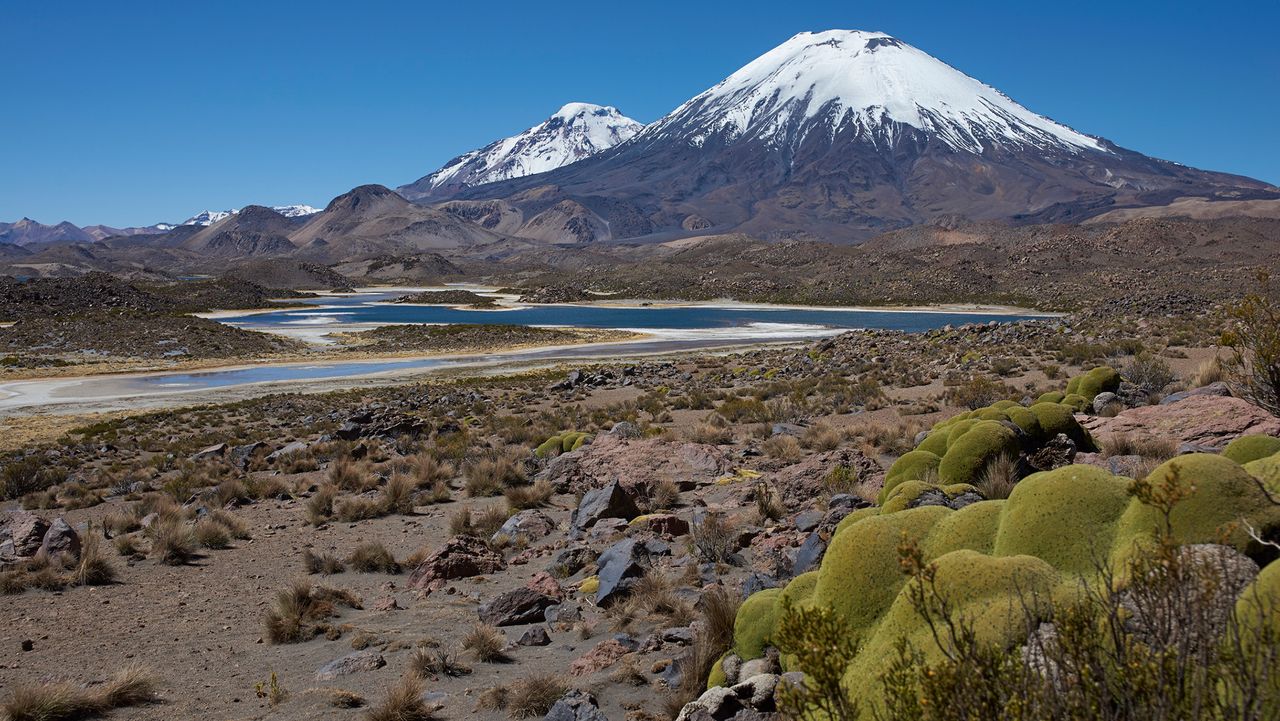
Scientists have uncovered a volcanic layer dating back 22 million years that essentially captured a snapshot of the Andes in their formative stage, offering an uncommon glimpse into the multi‑million‑year ascent of the continent‑wide chain.
The material stems from a colossal eruption of the Lauca Caldera, located in present‑day northern Chile. The explosion hurled a dense veil of ash and pumice over the adjacent lands, locking in a precise portrait of the scenery much like Vesuvius’s ash entombed Pompeii.
Examination of the ash‑rich layers shows that during the eruption the Andes consisted of a modest chain of raised blocks instead of the lofty summits we observe now. Fossil plants and sedimentary strata point to a terrain of gentle hills, river valleys and volcanic plains, implying that the range expanded stepwise rather than via a single, massive uplift.
Researchers used radiometric dating of volcanic minerals to verify the 22‑million‑year age, and stratigraphic analysis charted the ash layer’s spread over a broad region. The discovery of exceptionally preserved vegetation, such as early‑Miocene podocarp and araucaria species, enabled paleobotanists to infer the climate and ecosystems present alongside the young Andes.
These results carry wider significance for grasping how mountain belts form. The Andes arise from the Nazca Plate sliding beneath the South American Plate, a interaction that drives volcanism and crustal shortening. The fresh data backs a scenario where the range progressed via multiple modest, continuous uplift phases, intermittently interrupted by volcanic eruptions that deposited ash and lava onto the shaping landscape.
Apart from scholarly value, the research sheds light on how mountain formation affects regional climate and biodiversity. The slow ascent of the Andes altered atmospheric flow, modifying rainfall patterns that eventually nurtured the diverse ecosystems of the Amazon and the high‑altitude puna.
Upcoming investigations seek similar ash deposits along other portions of the Andean backbone, which could sharpen uplift chronologies and clarify the relationship between tectonics and volcanism. Better knowledge of these dynamics also aids hazard evaluation for present‑day communities residing in the seismically active Andean corridor.
By preserving a moment of the Andes’ early development, the Lauca Caldera eruption serves as a natural record, enabling researchers to reconstruct the gradual, steady sequence that forged one of Earth’s most imposing mountain ranges.


Comments (0)
Be the first to comment.
Join the discussion